Introduction: How Investors Spot a Neighborhood Before Everyone Else
Every investor wants the same thing: buying before a neighborhood explodes.
The problem? By the time a neighborhood is labeled “hot,” prices have already jumped.
In Indianapolis, that pattern has played out again and again — Fountain Square, Bates-Hendricks, and Broad Ripple were all considered “risky” investments years before they became some of Indy’s most desirable areas.
As of early 2026, the median home price in Indianapolis sits around $285K, up roughly 6% year-over-year. At the same time, rents across many central neighborhoods have increased between 4–7% since 2024, creating strong opportunities for buy-and-hold investors.
The key is recognizing the signals of growth early.
Let’s walk through the biggest signs that a neighborhood might be one of the up and coming Indianapolis neighborhoods for investors in 2026.
Development Activity Is Starting to Show Up
Construction cranes and permits are one of the earliest signals of growth
When developers start buying land or renovating older buildings, it usually means they believe the area has strong future demand.
Look for:
New apartment developments
Mixed-use projects (retail + residential)
Historic building renovations
Streetscape improvements
In Indianapolis, development tends to move outward from popular hubs.
For example:
Fountain Square → Bates-Hendricks
Mass Ave → Windsor Park
Broad Ripple → SoBro
Once development reaches the edges of a hot area, nearby neighborhoods often follow.
If you're interested in neighborhoods that already show strong investment momentum, check out this guide to https://rootsrealty.co/blog/top-indianapolis-neighborhoods-rental-investment-2025.
Rent Prices Are Climbing Faster Than Home Prices
Rent pressure is one of the most reliable growth indicators
One of the clearest signals of an up-and-coming neighborhood is rent growth outpacing home prices.
When rents rise quickly but home prices haven’t caught up yet, investors can still find strong cash flow opportunities.
For example:
Many Near Eastside neighborhoods saw rent growth of 6–8% between 2024–2025
Meanwhile, property values in some pockets rose only 3–4%
That gap often closes quickly once investors notice the opportunity.
This is why many experienced investors focus on rental demand first, not appreciation.
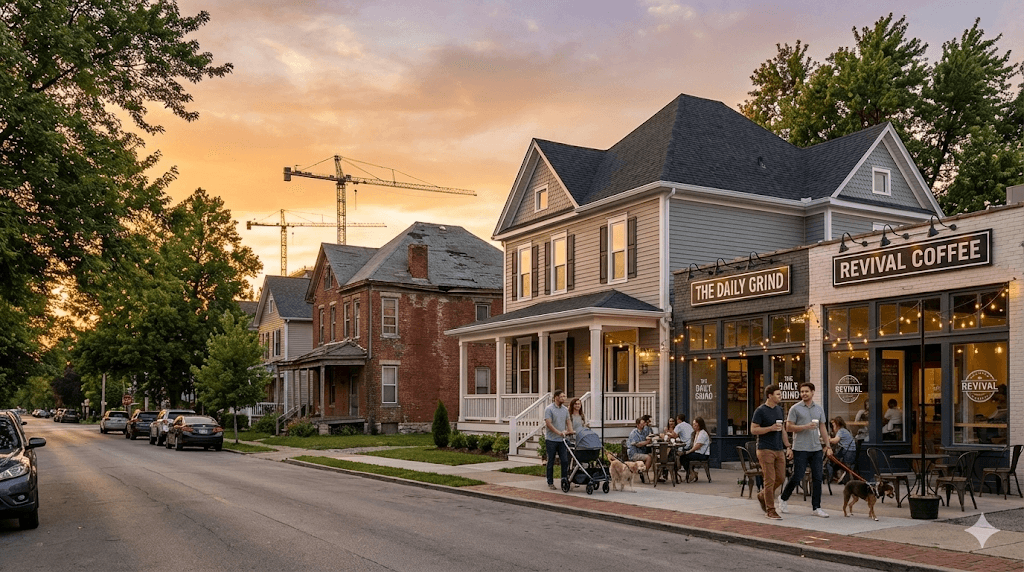
Local Businesses and Coffee Shops Start Appearing
Small businesses usually arrive before large development
A surprising but reliable signal: coffee shops and local restaurants.
Entrepreneurs tend to move into neighborhoods where:
Young renters are moving in
Walkability is improving
Housing prices are still affordable
In Indy, many neighborhoods started gaining attention when independent cafes, breweries, and coworking spaces opened.
You’ll often notice the progression:
Coffee shop opens
Brewery or restaurant follows
Small retail shops arrive
Larger developers move in
This pattern played out in areas like Bates-Hendricks, which we break down here:
https://rootsrealty.co/blog/bates-hendricks-indianapolis-real-estate-investment
Schools and Infrastructure Improvements
City investment often predicts long-term appreciation
Another strong signal is public investment.
When a city upgrades infrastructure, it’s usually because leaders expect population growth.
Watch for:
School renovations or new charter schools
Park upgrades
Road improvements
New bike trails or greenways
Indianapolis has invested heavily in projects like the Indy Cultural Trail and Monon Trail expansions, which have historically boosted property values nearby.
Neighborhoods connected to these improvements tend to see both rental demand and appreciation rise.
Younger Buyers and Renters Are Moving In
Demographic shifts can change neighborhoods quickly
One of the fastest ways neighborhoods transform is through demographic shifts.
When young professionals start moving into an area, demand for housing and amenities follows.
Signs this is happening:
More renovations and flips
Higher-end rental listings
New gyms or coworking spaces
Increased social media buzz about the area
In Indianapolis, neighborhoods near downtown often experience this transition first because young professionals want:
Short commutes
Walkable nightlife
Access to restaurants and entertainment
These shifts are often a precursor to strong appreciation.
Property Renovations Are Increasing
Investor activity is a huge signal
Another big indicator is renovation activity.
If you start seeing multiple homes on the same street being flipped or updated, investors are already betting on the neighborhood’s future.
Watch for:
Exterior renovations
New roofs and siding
Modern kitchens and bathrooms
Landscaping upgrades
Once renovation momentum builds, home values often rise quickly.
For investors who want to understand how appreciation and strategy interact in Indianapolis, check out this deeper market breakdown:
https://rootsrealty.co/blog/indianapolis-real-estate-investing-outlook-2026
Commercial Growth Is Expanding Nearby
Retail corridors often predict residential growth
Another signal investors watch is commercial expansion near the neighborhood.
Examples include:
Grocery stores moving in
New retail centers
Major employers expanding nearby
Transit improvements
These projects create jobs and convenience — both major drivers of housing demand.
In Indianapolis, areas surrounding downtown and the near-east side have seen significant commercial investment between 2024 and 2026, which is pushing residential demand outward.
This “ripple effect” often leads investors to find opportunities just outside already-hot neighborhoods.
Experienced Investors Are Talking About It
Investor conversations can reveal hidden opportunities
Sometimes the earliest signal is simply where experienced investors are focusing their attention.
When the local investment community starts discussing certain neighborhoods more frequently, it often means deals are already happening there.
A great example is discussed in this Roots Realty podcast episode:
https://rootsrealty.co/podcast/the-best-and-worst-neighborhoods-to-invest-in-indianapolis
The episode breaks down how experienced investors evaluate neighborhoods and why some overlooked areas end up becoming the best long-term investments.
Listening to insights like these can help you think like seasoned investors rather than chasing trends after they peak.
What This Means for Investors in 2026
Indianapolis remains one of the most attractive real estate markets in the Midwest.
Why?
Because it still offers a rare combination of:
Affordable home prices
Strong rental demand
Population growth
Investor-friendly regulations
While coastal markets often require $800K+ investments to get started, many Indy properties still fall between $150K–$350K, making entry much easier for first-time investors.
The challenge isn’t finding a deal — it’s identifying which neighborhoods will appreciate next.
How to Evaluate Up and Coming Indianapolis Neighborhoods
A quick framework investors use
When evaluating a neighborhood, many investors ask these five questions:
Are rents rising faster than home prices?
Is development happening nearby?
Are renovations increasing on multiple blocks?
Are new businesses opening?
Is the city investing in infrastructure?
If the answer to three or more of these is yes, the neighborhood may already be entering a growth cycle.
This approach helps investors move beyond guesswork and evaluate opportunities more strategically.
Final Thoughts: Finding the Next Indianapolis Investment Hotspot
The best investors rarely buy in neighborhoods that are already trendy.
They buy just before the wave arrives.
By watching signals like development, rent growth, demographic changes, and commercial expansion, you can often identify up and coming Indianapolis neighborhoods for investors in 2026 before the wider market catches on.
And that timing can make a massive difference in long-term returns.
Ready to Start Investing in Indianapolis?
If you’re looking to build wealth through Indianapolis real estate, having a local team makes a huge difference.
Explore investor resources here:
https://rootsrealty.co/invest
Or connect with the team at Roots Realty Co. to start identifying the next big opportunity.
Ready to explore Indy’s real estate opportunities? Reach out to Roots Realty Co. and let’s start your journey.