If you’re moving to Indy in 2026, here’s the honest truth:
It’s not about finding the “best” neighborhood.
It’s about finding the one that fits you.
We’ve worked with dozens of relocation buyers over the past few years, and the biggest mistakes happen when people shop by price alone — or hype alone.
So here’s your practical, no-fluff moving to Indianapolis 2026 checklist to help you narrow in on the right area before you write an offer.
Grab a coffee. Let’s map this out.
Step 1: Commute Mapping (Even If You’re Hybrid)
Indy traffic isn’t Chicago. But commute still matters.
Before you fall in love with a home, answer this:
How many days per week are you in-office?
Where exactly is that office?
What’s your tolerance for 30+ minutes in the car?
In 2026, a lot of buyers are hybrid — meaning they’ll tolerate a longer commute if it’s only 2–3 days a week.
For example:
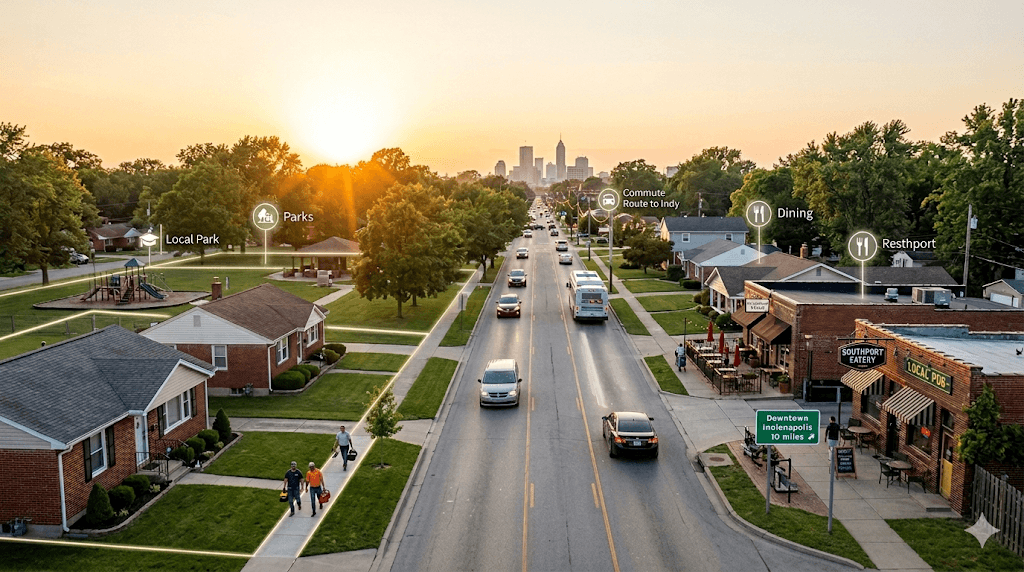
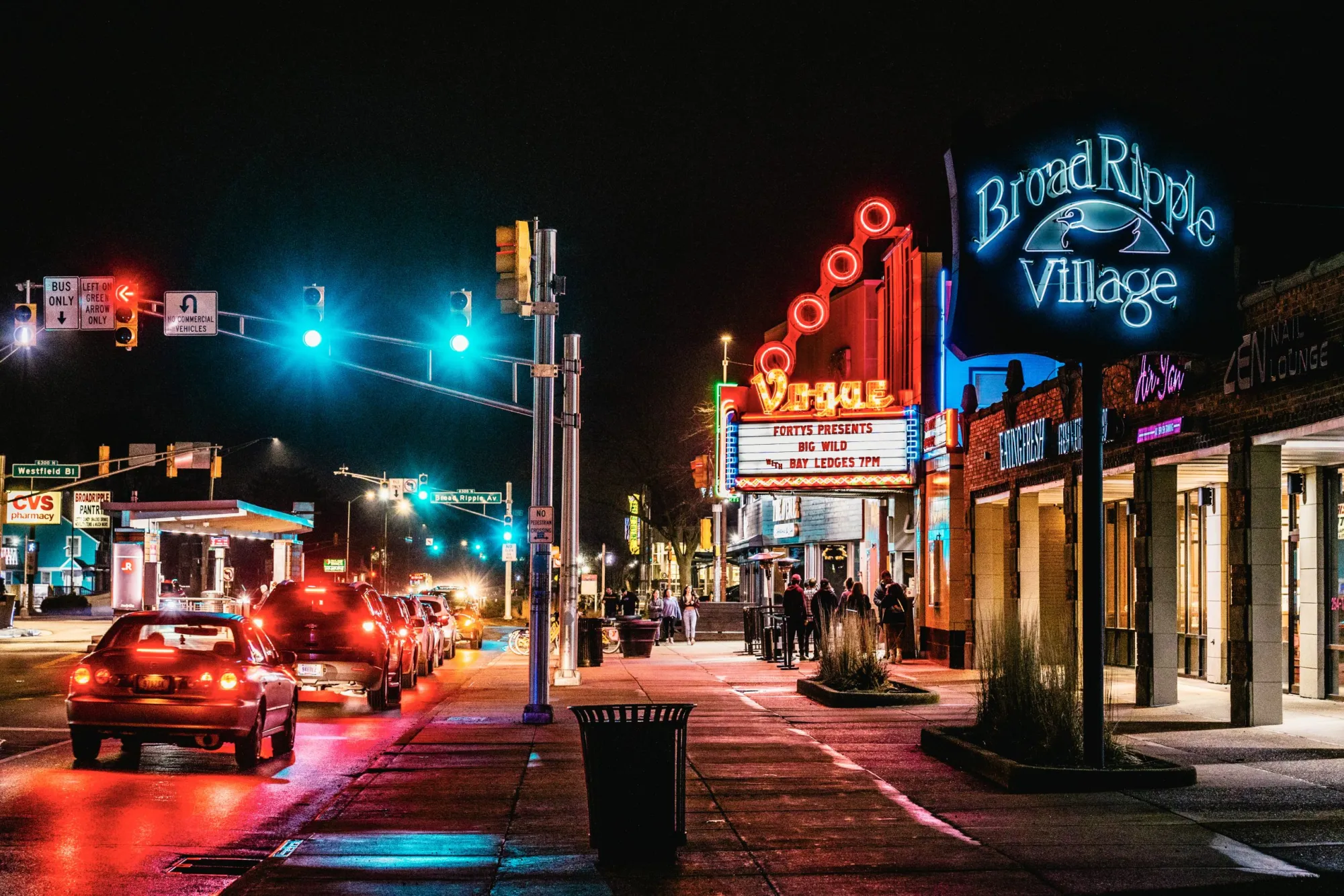
Downtown professionals may love Broad Ripple, Fountain Square, or Meridian-Kessler.
Northside corporate commuters often lean Carmel, Fishers, or Zionsville.
Westside access near the airport pulls buyers toward Avon or Brownsburg.
Map your commute at rush hour. Not Sunday afternoon.
Lifestyle alignment starts with daily reality.
Step 2: Lifestyle Fit (Be Honest With Yourself)
This is where buyers often get it wrong.
Ask yourself:
Do you want walkability — or quiet cul-de-sacs?
Nightlife — or nature trails?
New construction — or historic charm?
For example, if you’re drawn to coffee shops, local bars, and trail access, you might love Broad Ripple. We break that neighborhood down fully here:
https://rootsrealty.co/blog/living-in-broad-ripple-indianapolis-2026
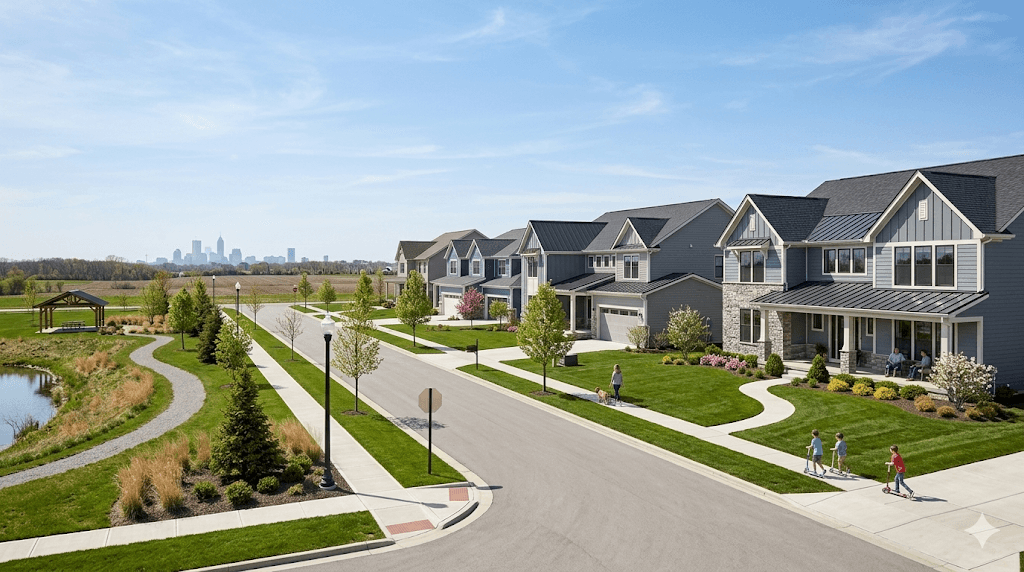
If you prefer master-planned communities, HOA pools, and newer builds, suburbs may suit you better.
The wrong lifestyle fit creates regret faster than the wrong paint color.
Step 3: School Needs (Even If You Don’t Have Kids)
School districts impact resale value whether you personally use them or not.
Strong districts like Carmel, Fishers, and Zionsville often command higher home prices — but they also bring:
More stable appreciation
Stronger buyer demand at resale
Competitive spring markets
If you’re moving with kids, district mapping becomes non-negotiable.
If you don’t have kids, think of schools as future liquidity insurance.
Neighborhood demand follows district reputation.
Step 4: Budget Alignment (Not Just Pre-Approval)
Here’s a big one.
Just because you’re pre-approved for $500,000 doesn’t mean that’s your comfort zone.
When building your moving to Indianapolis 2026 checklist, calculate:
Monthly payment comfort
Property taxes (which vary by township)
HOA dues
Maintenance buffer
Commuting costs
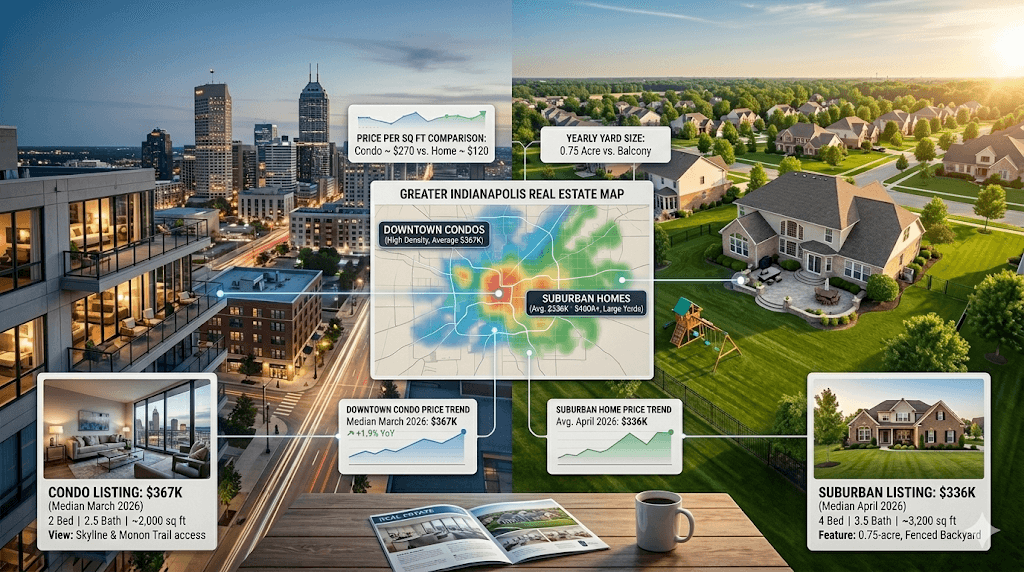
Suburbs with top-ranked schools typically come with higher taxes and price points.
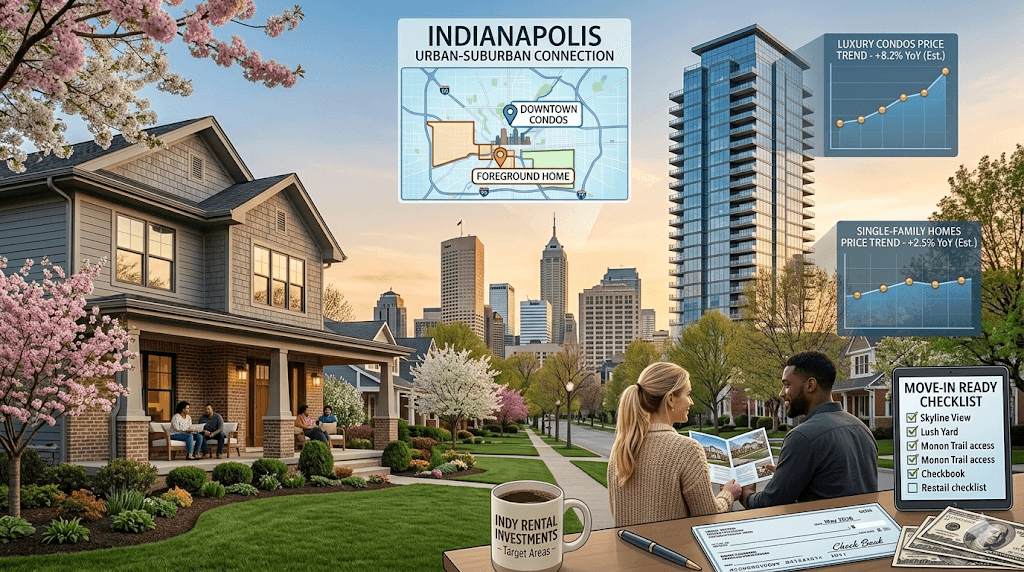
Urban neighborhoods may have lower entry prices but older housing stock — meaning higher maintenance.
Budget alignment isn’t just about approval.
It’s about peace of mind.
If you’re brand new to this process, our full guide here walks through financing and preparation steps:
https://rootsrealty.co/blog/indianapolis-first-time-home-buyer-guide-2025
Even if you’re not technically a first-time buyer, it’s a helpful framework refresher.
Step 5: Long-Term Plan (5-Year vs 10-Year Mindset)
Are you:
Testing Indy for 2–3 years?
Relocating permanently?
Planning to start a family?
Hoping to build equity and upgrade later?
Your timeline shapes your neighborhood strategy.
Shorter horizon?
Prioritize resale flexibility and high-demand areas.
Longer horizon?
You can stretch into areas with slower but steady appreciation.
In 2026, Indianapolis continues to see population growth and in-migration from higher-cost states. We unpack those trends here:
https://rootsrealty.co/podcast/the-real-reason-people-are-moving-to-indianapolis
Understanding why people are moving helps you anticipate where demand stays strong.
Step 6: Neighborhood Demand Signals
Here’s something we coach relocation buyers on:
Look beyond the listing.
Ask:
How many days on market?
How competitive are offers?
Is inventory rising or tightening?
Are price reductions common?
Neighborhood demand tells you:
How easy resale will be.
How aggressive you’ll need to negotiate.
Whether you’re buying at peak heat or balanced conditions.
In 2026, Indy is more balanced than the ultra-competitive years — but pockets still move fast.
Understanding micro-market behavior protects you from overpaying.
Step 7: Property Type Fit
Are you a:
Condo person?
Single-family yard person?
Townhome maintenance-minimalist?
Acreage dreamer?
Indianapolis offers:
Downtown condos
Historic bungalows
New construction subdivisions
Semi-rural outer-ring homes
Your maintenance tolerance matters.
Older homes in Midtown areas offer charm but require maintenance planning.
New builds reduce early maintenance but often carry HOA fees.
There’s no right answer — just aligned answers.
Step 8: Emotional Check
This one sounds fluffy — but it’s real.
When you tour a neighborhood, ask:
Can I see myself walking here at night?
Would I enjoy weekends here?
Does this feel energizing or isolating?
We’ve seen buyers choose “logical” neighborhoods and feel disconnected.
Indy’s neighborhoods each have a distinct personality.
Trust both math and gut.
Common Relocation Mistakes We See
Over the years, here are patterns we notice:
Buying too far from daily routine.
Prioritizing square footage over location.
Underestimating commute fatigue.
Ignoring resale dynamics.
Falling for aesthetics before logistics.
Your moving to Indianapolis 2026 checklist isn’t about perfection.
It’s about minimizing regret.
Quick Self-Assessment Before You Offer
Before writing an offer, ask:
Does this location support my daily life?
Am I comfortable with the monthly payment long-term?
Would I feel confident reselling here?
Does this neighborhood align with my lifestyle goals?
If you can confidently say yes to those, you’re likely on the right track.
Final Thoughts: Moving to Indianapolis 2026 Checklist
Moving to Indy in 2026 is exciting.
The city offers:
Affordable relative pricing compared to coastal markets.
Diverse neighborhoods.
Strong job growth.
Lifestyle flexibility.
But the right neighborhood isn’t about what’s trending.
It’s about:
Commute mapping.
Lifestyle fit.
School awareness.
Budget alignment.
Long-term clarity.
If you’re relocating and want a second set of eyes on specific neighborhoods, price ranges, or commute mapping, we’d love to help you think it through strategically.
Ready to explore Indy’s real estate opportunities?
Reach out to Roots Realty Co. and let’s start your journey.