Suburbs vs City: Pricing Gaps Around Indianapolis in May 2026
If you’re buying a home around Indianapolis right now, you’ve probably noticed something:
The pricing gap between the city and suburbs is getting really interesting in 2026.
A few years ago, buyers flooded into the suburbs for more space and lower prices. But now? Rising suburban demand, new construction costs, and changing mortgage rates are reshaping the market again.
At the same time, some city neighborhoods are offering surprisingly competitive value—especially for buyers willing to think long-term.
So where should you actually buy in the Indianapolis May 2026 housing market?
Let’s break down how pricing, inventory, commute, and lifestyle are shifting between Indy’s suburbs and city neighborhoods.
What’s Happening in the Indianapolis Housing Market in May 2026?
Inventory Is Finally Expanding
One of the biggest stories in 2026 is increased housing inventory.
Compared to the ultra-tight market of previous years:
More resale homes are hitting the market
Builders are adding new construction inventory
Buyers have more choices again
This has created a more balanced market overall.
Mortgage Rates Are Influencing Buyer Decisions
Mortgage rates sitting in the mid-6% range are changing affordability calculations.
Instead of simply buying the biggest house possible, many buyers are now asking:
How far can I realistically commute?
How much monthly payment can I handle?
Is more space worth a longer drive?
That’s why the city vs suburb conversation is becoming more strategic.
Indianapolis City Home Prices in 2026
Urban Neighborhoods Are Still Competitive
Popular Indianapolis neighborhoods like:
Fountain Square
Broad Ripple
Bates-Hendricks
Irvington
Continue seeing strong demand in 2026.
These areas attract buyers who value:
Walkability
Entertainment
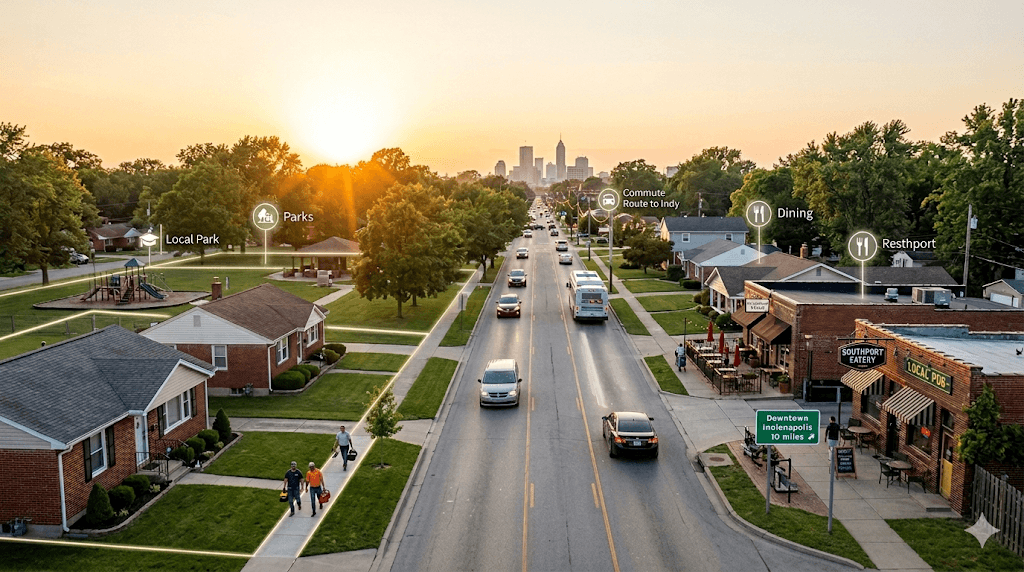
Shorter commutes
Long-term appreciation potential
Average Pricing in the City
Depending on the neighborhood:
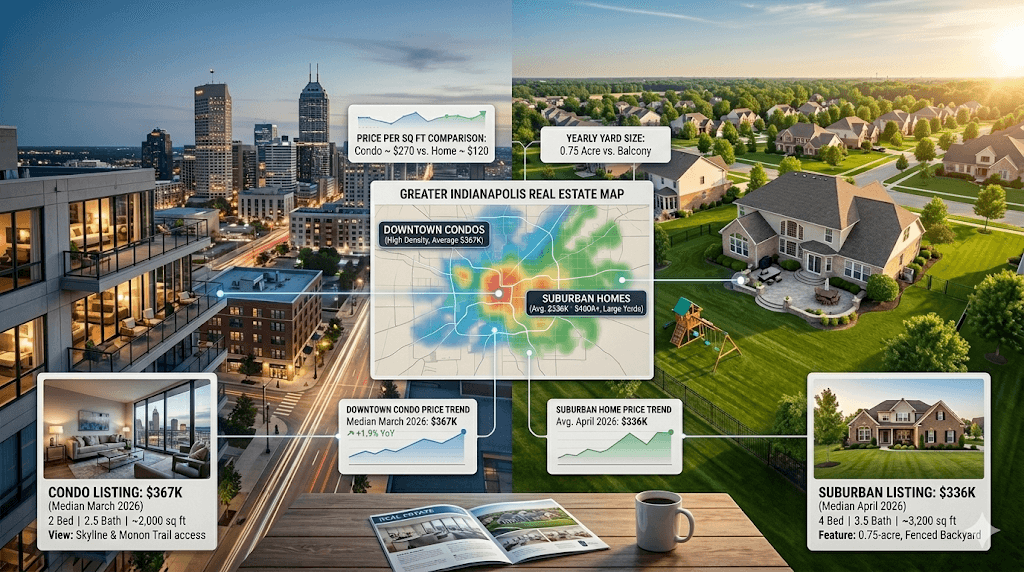
Entry-level homes can range from $220K–$300K
Renovated homes in high-demand areas often exceed $400K
The biggest thing buyers are paying for? Location.
Why Some Buyers Are Returning to the City
As suburban prices rise, some buyers are realizing city neighborhoods no longer look dramatically more expensive.
Especially when you factor in:
Gas costs
Commute time
Lifestyle convenience
For many younger buyers, being closer to downtown is becoming attractive again.
Suburban Home Prices Around Indianapolis
The Suburbs Are Still in High Demand
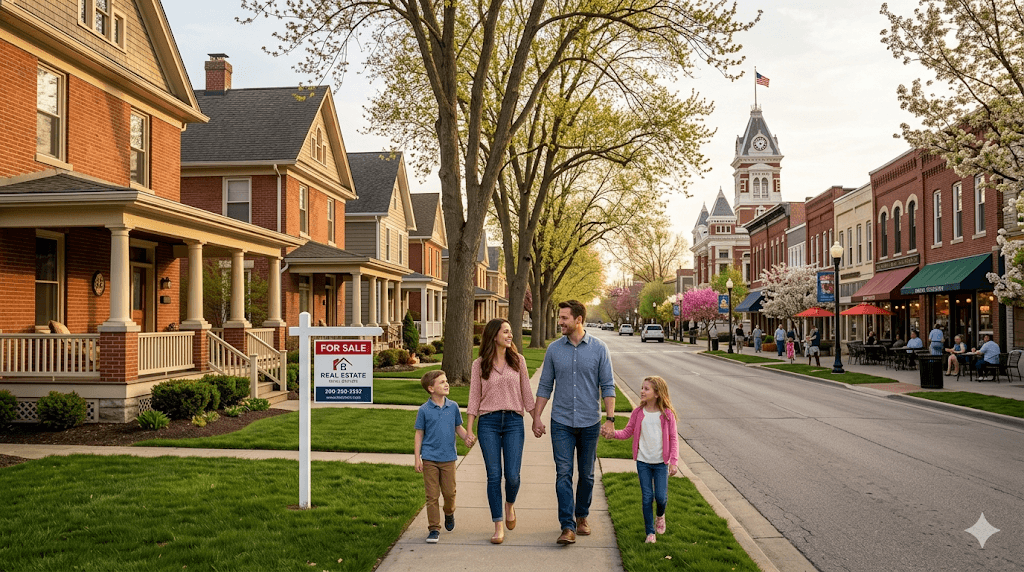
Suburbs remain extremely popular in 2026—especially for families.
Areas like:
Fishers
Carmel
Brownsburg
Avon
Plainfield
Continue attracting strong buyer demand.
What Buyers Get in the Suburbs
The main draw is still:
More square footage
Larger yards
Newer homes
Highly rated school districts
But affordability is changing.
Pricing Gaps Are Shrinking
In many suburbs, average home prices now sit between:
$350K–$500K+
Especially for newer construction homes.
That means the pricing gap between urban Indy and the suburbs is narrowing in some areas.
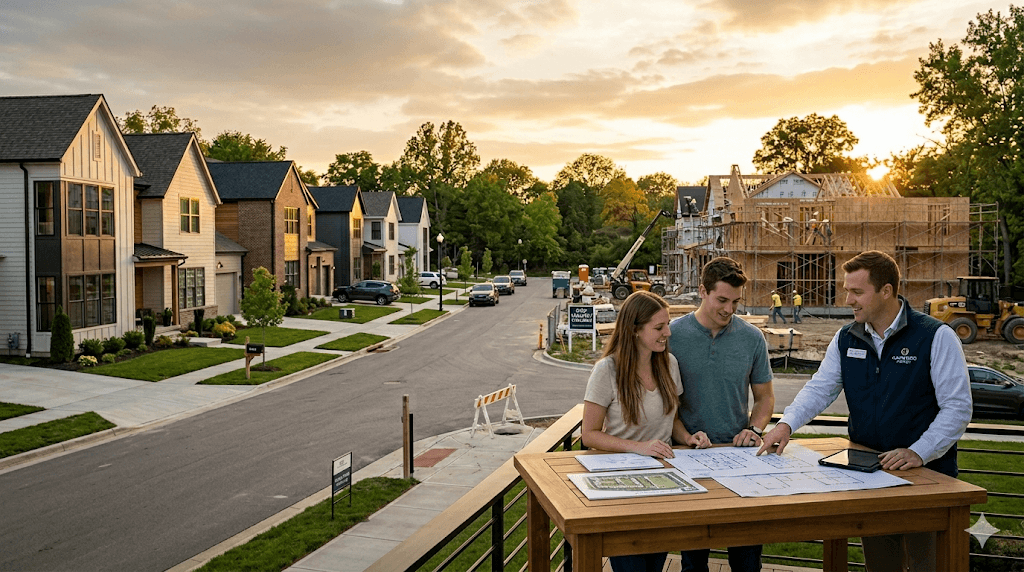
New Construction Is Driving Suburban Pricing
Builders Are Reshaping the Market
One major reason suburban prices are rising?
New construction.
Builders are actively developing communities around Indianapolis, but rising labor and material costs are keeping prices elevated.
Why Buyers Still Choose New Builds
Even with higher prices, buyers love:
Modern layouts
Energy efficiency
Lower maintenance costs
Builder incentives
Some builders are also offering mortgage rate buy-downs to help affordability.
Days on Market: City vs Suburbs
City Homes
In desirable city neighborhoods:
Well-priced homes still move quickly
Updated homes often receive multiple offers
Inventory remains somewhat limited
Suburban Homes
Suburban inventory is increasing faster in 2026.
That means:
More competition among sellers
Slightly longer days on market
More room for negotiation
This shift is creating opportunities for buyers willing to be patient.
Which Is Better for Appreciation?
City Neighborhoods Often Win Long-Term
Historically, urban neighborhoods closer to downtown Indianapolis have seen stronger appreciation.
Areas with:
Walkability
Development activity
Entertainment growth
Tend to outperform long-term.
Suburbs Offer Stability
Suburbs often provide:
More stable appreciation
Lower volatility
Strong family demand
Neither is automatically “better”—it depends on your goals.
What Investors Are Watching in 2026
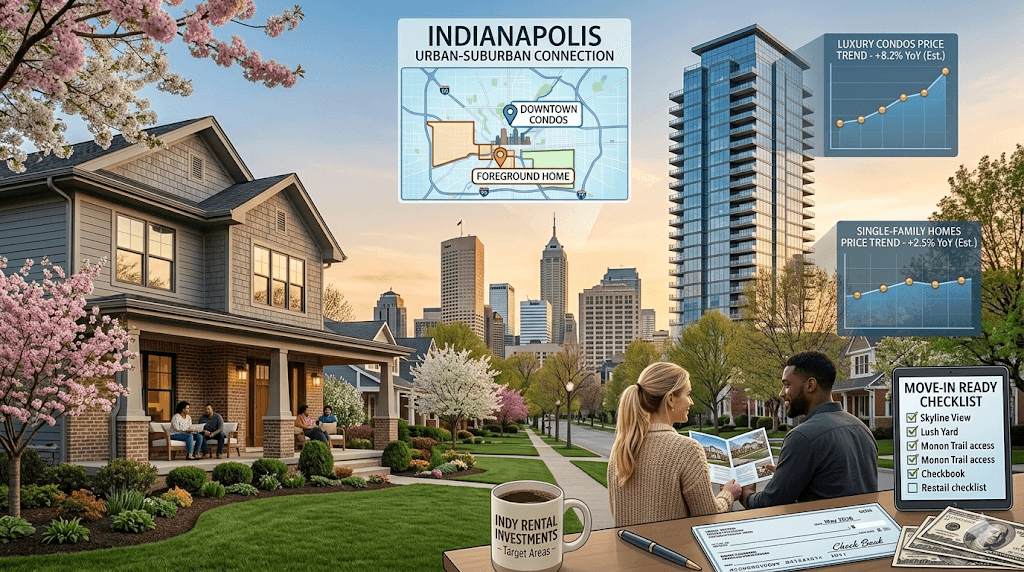
This conversation isn’t just important for buyers—it matters for investors too.
A lot of Indianapolis investor agents are closely tracking:
Urban appreciation trends
Suburban rental demand
New construction supply
Migration patterns around Indy
Because where people choose to live directly affects future investment opportunities.
If you’re looking at Indianapolis through an investment lens, this outlook is worth reading:
https://rootsrealty.co/blog/indianapolis-real-estate-investing-outlook-2026
And if you’re serious about building wealth through real estate, start here:
https://rootsrealty.co/invest
Working with a knowledgeable Indianapolis investor agent can help you evaluate which areas are positioned for long-term growth:
https://rootsrealty.co/indianapolis-investor-agent
How Buyers Are Deciding in 2026
Buyers Prioritizing Lifestyle
More buyers are asking:
Do I want walkability or space?
Short commute or bigger yard?
Older character homes or new construction?
There’s no universal right answer anymore.
Affordability Is Shaping Decisions
For some buyers, suburban prices are pushing them back toward city neighborhoods.
For others, city pricing still feels too competitive.
That’s why strategy and local market knowledge matter so much right now.
Indianapolis Homebuyer Checklist for May 2026
If you’re deciding between suburbs and city living, ask yourself:
What’s Your Monthly Budget?
Don’t just compare purchase prices—compare:
Taxes
Commute costs
HOA fees
Utility costs
How Important Is Commute Time?
This is becoming a bigger factor again as more employers return to hybrid schedules.
Are You Thinking Long-Term?
Your first home could eventually become:
A future rental
A stepping stone investment
A long-term appreciation play
That’s why thinking strategically matters.
If you want a full breakdown of what buyers should be considering this month, check this out:
https://rootsrealty.co/blog/how-to-win-competitive-indianapolis-market-2026
The Role of an Indianapolis Investor Agent (Even for Buyers)
One thing we tell clients all the time:
The smartest buyers think like investors—even if they’re buying a primary home.
That means evaluating:
Appreciation potential
Rental demand
Neighborhood growth
Long-term resale value
That’s exactly where a top Indianapolis investor agent can help:
https://rootsrealty.co/indianapolis-investor-agent
At Roots, we help buyers make decisions that support both lifestyle and long-term financial goals.
Final Thoughts: Suburbs or City in 2026?
The Indianapolis May 2026 housing market is giving buyers something they haven’t had in years:
Options.
If you want:
Walkability and appreciation → City neighborhoods may fit better
Space and newer homes → Suburbs still dominate
But the pricing gap between the two is shrinking faster than many buyers expected.
That’s why the best move in 2026 isn’t just finding a house—it’s understanding the market around it.
Ready to Explore Homes Around Indianapolis?
Whether you’re leaning toward the city or the suburbs, having the right strategy makes all the difference.
Explore buyer resources here:
https://rootsrealty.co/buy
Or connect directly with a top Indianapolis investor agent to map out your next move:
https://rootsrealty.co/indianapolis-investor-agent
Ready to explore Indy’s real estate opportunities? Reach out to Roots Realty Co. and let’s start your journey.