Join 2,000+ Indianapolis investors and homebuyers getting our free resources. Get yours now.

Living in Downtown Indianapolis in 2026: Homes & Lifestyle

Downtown Indianapolis homes 2026 guide. Condos, walkability, commute, entertainment & property values explained.

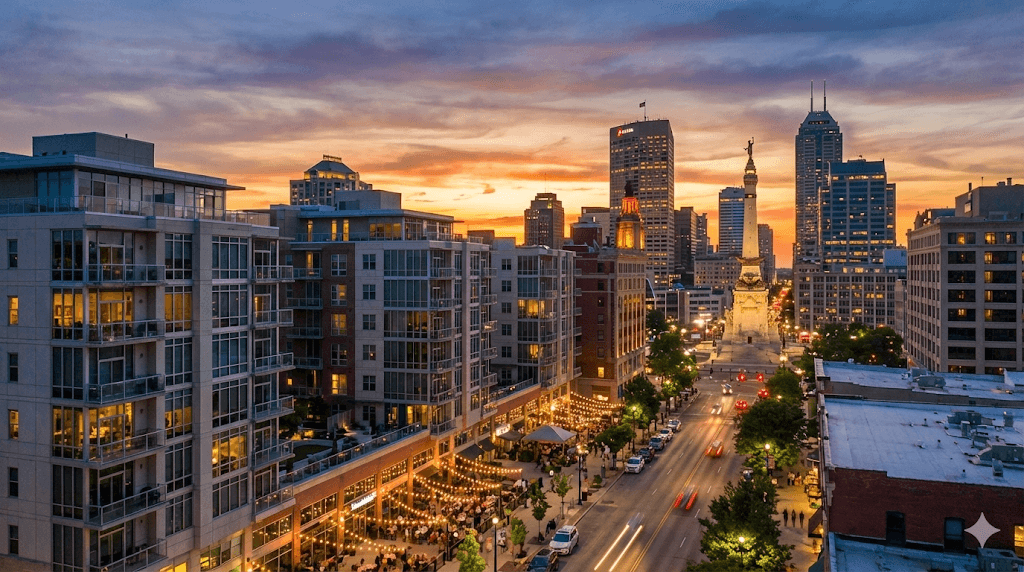
If you could walk to dinner, a Pacers game, your office, and your favorite coffee shop… would you?

That’s exactly why so many buyers are looking at Downtown Indianapolis homes 2026 style.

Downtown isn’t just for corporate professionals anymore. In 2026, it’s young couples, remote workers, investors, empty nesters, and first-time buyers who want energy without leaving Indy.

Let’s break down what living in Downtown Indianapolis actually looks like right now — and what buyers, sellers, and investors should know.

Downtown Indianapolis Homes 2026: What the Market Looks Like

Downtown Indy is primarily a condo and townhome market, with pockets of historic single-family homes just outside the core (think Fletcher Place and parts of Lockerbie).

In 2026:

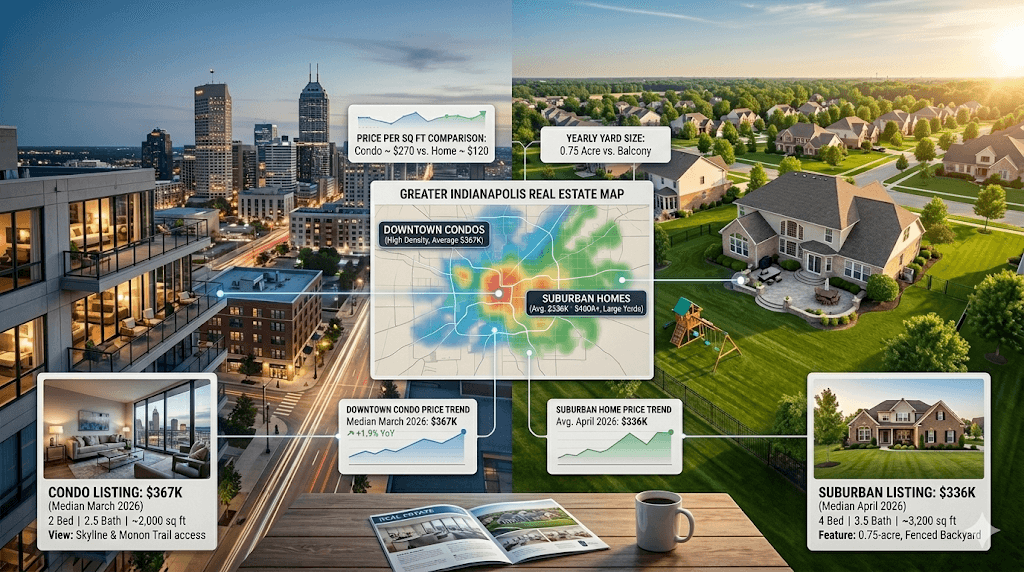
  • Median condo prices downtown are generally ranging from the high $200Ks to mid $400Ks depending on building and amenities.

  • Luxury units near Mass Ave or the Canal can exceed $600K+.

  • Entry-level condos still exist under $250K, but inventory is tighter in that range.

Compared to 2023–2024, appreciation has been steady but not explosive. The downtown market has matured. Buyers are more value-focused, and days on market are slightly longer than peak frenzy years.

If you want a broader look at how 2026 is shaping up citywide, read:
👉 https://rootsrealty.co/blog/indianapolis-market-forecast-2026-buyers

Downtown follows similar trends — but with its own personality.

Condo vs. Single-Family Downtown: What Makes Sense?

Downtown Condos

Condos dominate the market here.

Pros:

  • Walkability

  • Lower maintenance

  • Amenities (garage parking, rooftop decks, gyms)

  • Strong appeal for young professionals and traveling nurses

Cons:

  • HOA fees (often $250–$600+ per month)

  • HOA rules

  • Limited yard space

If you're deciding between downtown living or heading to the suburbs for more space, this guide helps break it down:
👉 https://rootsrealty.co/blog/condo-vs-house-downtown-vs-suburbs-indianapolis

It’s one of the most common 2026 buyer dilemmas we see.

Downtown Single-Family Homes

They’re rarer, which can make them powerful long-term holds.

Neighborhoods bordering downtown often see strong appreciation because:

  • You get walkability

  • You avoid HOA fees

  • You capture both lifestyle and rental appeal

Investors especially love this hybrid zone.

Walkability in Downtown Indianapolis (And Why It Matters)

Let’s be real — walkability sells.

Downtown Indy consistently ranks as one of the most walkable areas in the city. You’ve got:

  • Mass Ave restaurants

  • Gainbridge Fieldhouse

  • Lucas Oil Stadium

  • The Canal Walk

  • Bottleworks District

  • Whole Foods

For many buyers in 2026, commute time is no longer just “drive to office.”

It’s:

  • Walk to coworking space

  • Bike to Eli Lilly

  • 10-minute Uber to the airport

That lifestyle factor drives demand — and supports property values.

Commute & Access: Downtown as a Central Hub

One underrated advantage of Downtown Indianapolis homes in 2026? Centrality.

You’re plugged into:

  • I-65

  • I-70

  • I-465 loop access

Which means:

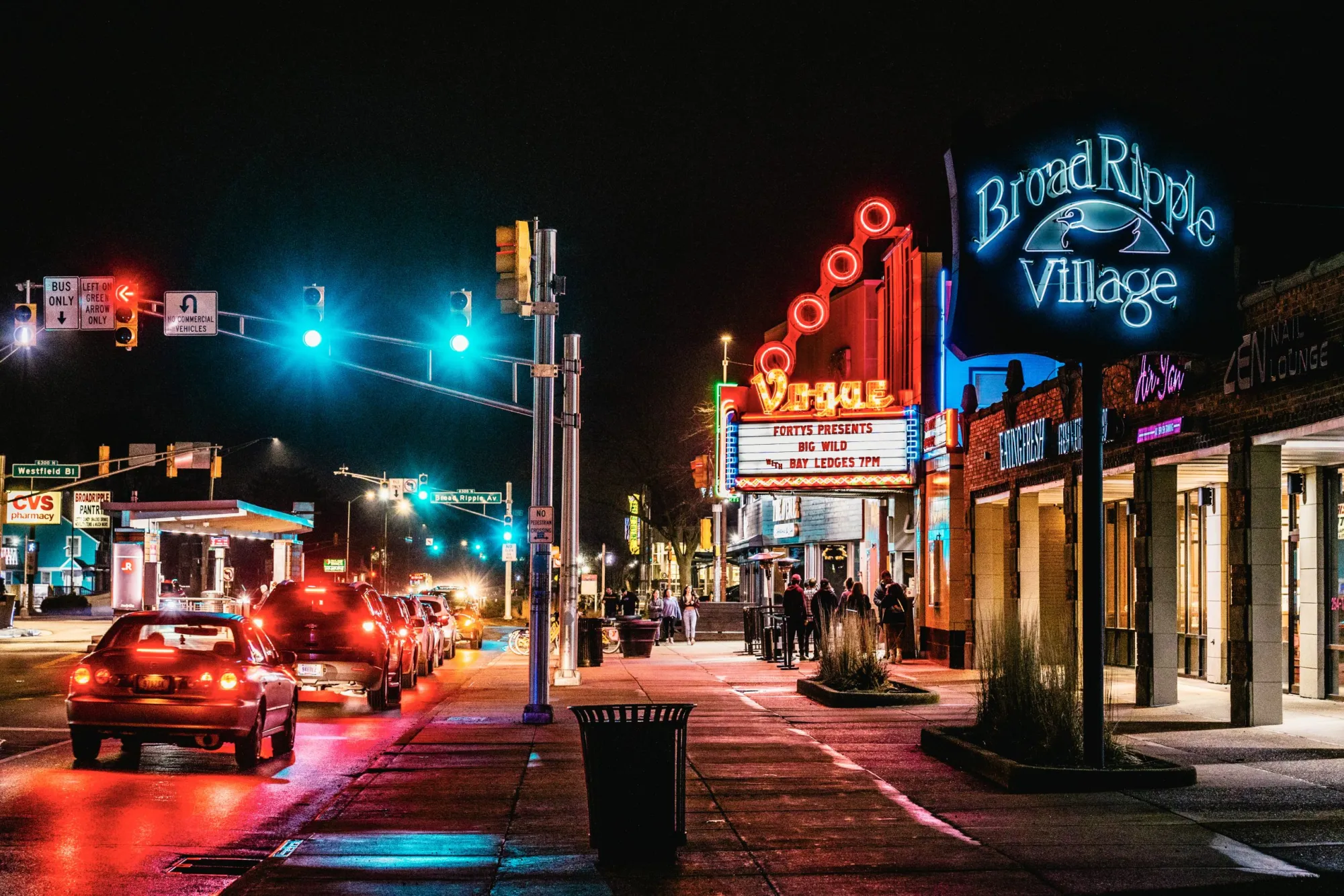
15–20 minutes to Broad Ripple
25 minutes to Carmel
20 minutes to Greenwood

For hybrid workers splitting time between home and office, that flexibility matters.

Entertainment & Lifestyle: Why People Actually Move Downtown

We’ve talked about this on the podcast before — especially in this episode:
👉 https://rootsrealty.co/podcast/the-real-reason-people-are-moving-to-indianapolis

People aren’t just moving for affordability.

They’re moving for lifestyle.

Downtown Indianapolis offers:

  • Live sports year-round

  • Walkable nightlife

  • Festivals

  • Farmers markets

  • Rooftop dining

  • Cultural events

For buyers under 40, that energy often outweighs a bigger yard in the suburbs.

For empty nesters? It’s the opposite of maintenance-heavy suburban living.

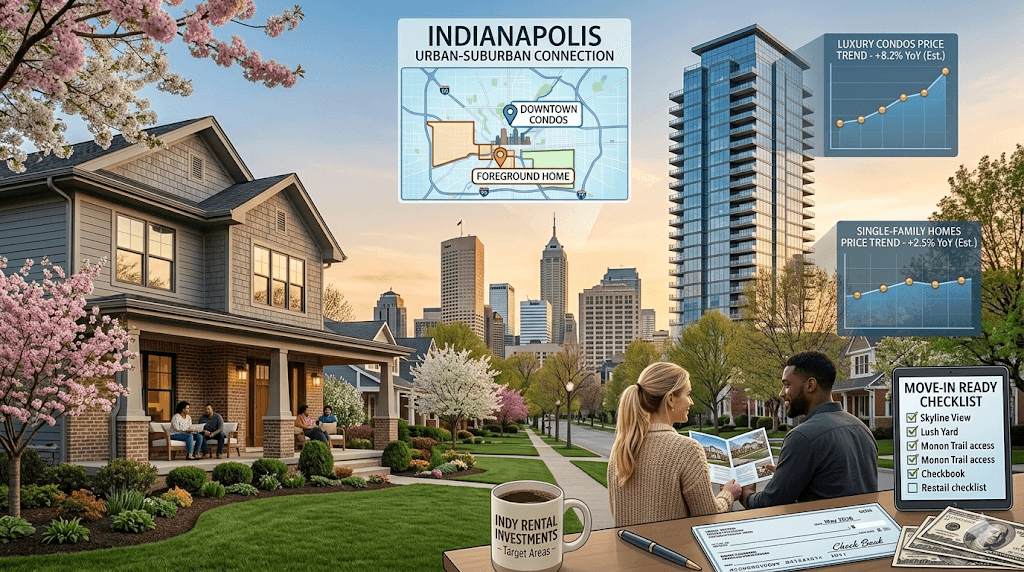
Property Values in Downtown Indianapolis (2026 Outlook)

Downtown property values tend to move differently than outer neighborhoods.

In 2022–2023, suburban homes outpaced downtown condos in appreciation.

In 2025–2026, we’re seeing:

  • Stabilization in condo pricing

  • Moderate appreciation (2–4% annually in many buildings)

  • Strong demand for updated, move-in-ready units

Buyers are more selective now.

High HOA fees + outdated interiors = longer days on market.

Updated kitchens + good parking + walkability = fast offers.

For sellers, presentation matters more than ever.

Investors: Is Downtown Indianapolis Still a Good Play?

Short answer: yes — but strategy matters.

Long-Term Rentals

Downtown condos can perform well as:

  • Executive rentals

  • Travel nurse housing

  • Corporate leases

However, HOA rules often limit short-term rentals — always verify before buying.

Appreciation Play

Because downtown land is limited, supply constraints can protect long-term value.

You’re betting on:

  • Continued population growth

  • Urban redevelopment

  • Corporate investment

In 2026, Indianapolis continues to attract out-of-state buyers looking for affordability compared to Chicago, Nashville, or Denver.

Downtown is often their first stop.

Sellers: What You Need to Know in 2026

If you’re selling downtown this year:

  1. Price accurately — buyers are data-savvy.

  2. Stage aggressively — downtown buyers expect polished interiors.

  3. Highlight walkability and lifestyle, not just square footage.

Condo sellers especially need to factor in:

  • HOA financial health

  • Pending assessments

  • Comparable building sales

Transparency builds trust — and speeds up offers.

Who Should (And Shouldn’t) Buy Downtown in 2026?

Downtown Might Be Perfect If You:

  • Value walkability over yard space

  • Want minimal exterior maintenance

  • Work hybrid or remote

  • Love events and nightlife

  • Travel often

Downtown Might Not Be Ideal If You:

  • Need large private outdoor space

  • Want ultra-quiet surroundings

  • Are sensitive to HOA structures

The key is aligning lifestyle with investment logic.

Real Example: Buyer Scenario (2026)

Let’s say you’re a 29-year-old professional working hybrid.

You’re choosing between:

$325K downtown condo
vs
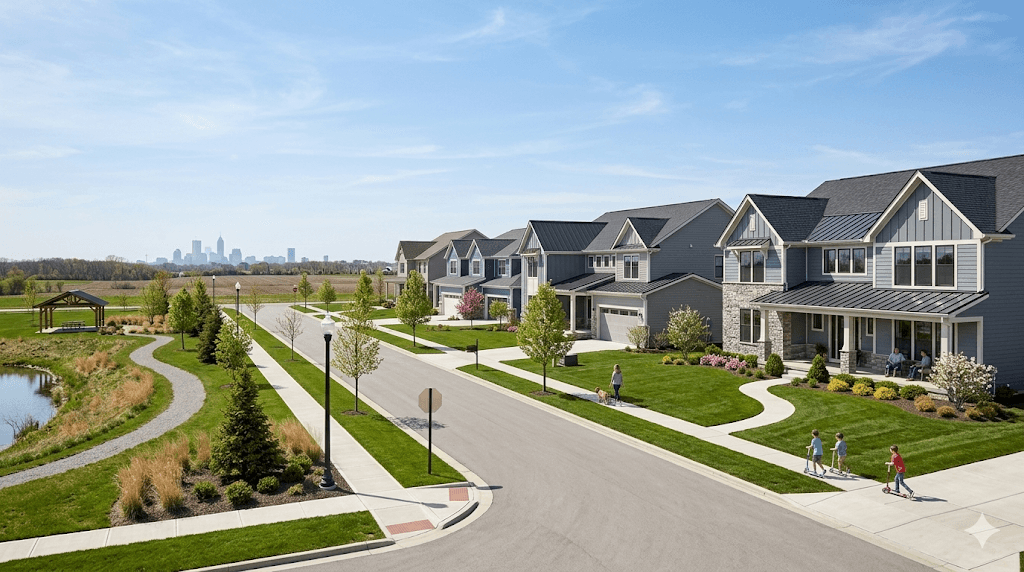
$325K home in Fishers

Downtown gives you:

  • Walkability

  • Social life

  • Lower commute stress

Suburbs give you:

  • Larger home

  • Yard

  • Possibly stronger school district resale appeal

Neither is wrong.

But your 5-year plan matters.

Final Thoughts on Downtown Indianapolis Homes 2026

Downtown Indianapolis in 2026 isn’t a gamble.

It’s a lifestyle-driven decision with solid long-term fundamentals.

Steady appreciation.
Strong rental demand.
Consistent redevelopment.
And a cultural core that keeps growing.

For buyers, it’s about understanding HOA structure, walkability premiums, and realistic appreciation expectations.

For sellers, it’s about strategic pricing and lifestyle marketing.

For investors, it’s about playing the long game.

If you’re considering buying, selling, or investing in Downtown Indianapolis, let’s talk through your goals and build a strategy around them.

Ready to explore Indy’s real estate opportunities? Reach out to Roots Realty Co. and let’s start your journey.
If you could walk to dinner, a Pacers game, your office, and your favorite coffee shop… would you?

That’s exactly why so many buyers are looking at Downtown Indianapolis homes 2026 style.

Downtown isn’t just for corporate professionals anymore. In 2026, it’s young couples, remote workers, investors, empty nesters, and first-time buyers who want energy without leaving Indy.

Let’s break down what living in Downtown Indianapolis actually looks like right now — and what buyers, sellers, and investors should know.

Downtown Indianapolis Homes 2026: What the Market Looks Like

Downtown Indy is primarily a condo and townhome market, with pockets of historic single-family homes just outside the core (think Fletcher Place and parts of Lockerbie).

In 2026:

  • Median condo prices downtown are generally ranging from the high $200Ks to mid $400Ks depending on building and amenities.

  • Luxury units near Mass Ave or the Canal can exceed $600K+.

  • Entry-level condos still exist under $250K, but inventory is tighter in that range.

Compared to 2023–2024, appreciation has been steady but not explosive. The downtown market has matured. Buyers are more value-focused, and days on market are slightly longer than peak frenzy years.

If you want a broader look at how 2026 is shaping up citywide, read:
👉 https://rootsrealty.co/blog/indianapolis-market-forecast-2026-buyers

Downtown follows similar trends — but with its own personality.

Condo vs. Single-Family Downtown: What Makes Sense?

Downtown Condos

Condos dominate the market here.

Pros:

  • Walkability

  • Lower maintenance

  • Amenities (garage parking, rooftop decks, gyms)

  • Strong appeal for young professionals and traveling nurses

Cons:

  • HOA fees (often $250–$600+ per month)

  • HOA rules

  • Limited yard space

If you're deciding between downtown living or heading to the suburbs for more space, this guide helps break it down:
👉 https://rootsrealty.co/blog/condo-vs-house-downtown-vs-suburbs-indianapolis

It’s one of the most common 2026 buyer dilemmas we see.

Downtown Single-Family Homes

They’re rarer, which can make them powerful long-term holds.

Neighborhoods bordering downtown often see strong appreciation because:

  • You get walkability

  • You avoid HOA fees

  • You capture both lifestyle and rental appeal

Investors especially love this hybrid zone.

Walkability in Downtown Indianapolis (And Why It Matters)

Let’s be real — walkability sells.

Downtown Indy consistently ranks as one of the most walkable areas in the city. You’ve got:

  • Mass Ave restaurants

  • Gainbridge Fieldhouse

  • Lucas Oil Stadium

  • The Canal Walk

  • Bottleworks District

  • Whole Foods

For many buyers in 2026, commute time is no longer just “drive to office.”

It’s:

  • Walk to coworking space

  • Bike to Eli Lilly

  • 10-minute Uber to the airport

That lifestyle factor drives demand — and supports property values.

Commute & Access: Downtown as a Central Hub

One underrated advantage of Downtown Indianapolis homes in 2026? Centrality.

You’re plugged into:

  • I-65

  • I-70

  • I-465 loop access

Which means:

15–20 minutes to Broad Ripple
25 minutes to Carmel
20 minutes to Greenwood

For hybrid workers splitting time between home and office, that flexibility matters.

Entertainment & Lifestyle: Why People Actually Move Downtown

We’ve talked about this on the podcast before — especially in this episode:
👉 https://rootsrealty.co/podcast/the-real-reason-people-are-moving-to-indianapolis

People aren’t just moving for affordability.

They’re moving for lifestyle.

Downtown Indianapolis offers:

  • Live sports year-round

  • Walkable nightlife

  • Festivals

  • Farmers markets

  • Rooftop dining

  • Cultural events

For buyers under 40, that energy often outweighs a bigger yard in the suburbs.

For empty nesters? It’s the opposite of maintenance-heavy suburban living.

Property Values in Downtown Indianapolis (2026 Outlook)

Downtown property values tend to move differently than outer neighborhoods.

In 2022–2023, suburban homes outpaced downtown condos in appreciation.

In 2025–2026, we’re seeing:

  • Stabilization in condo pricing

  • Moderate appreciation (2–4% annually in many buildings)

  • Strong demand for updated, move-in-ready units

Buyers are more selective now.

High HOA fees + outdated interiors = longer days on market.

Updated kitchens + good parking + walkability = fast offers.

For sellers, presentation matters more than ever.

Investors: Is Downtown Indianapolis Still a Good Play?

Short answer: yes — but strategy matters.

Long-Term Rentals

Downtown condos can perform well as:

  • Executive rentals

  • Travel nurse housing

  • Corporate leases

However, HOA rules often limit short-term rentals — always verify before buying.

Appreciation Play

Because downtown land is limited, supply constraints can protect long-term value.

You’re betting on:

  • Continued population growth

  • Urban redevelopment

  • Corporate investment

In 2026, Indianapolis continues to attract out-of-state buyers looking for affordability compared to Chicago, Nashville, or Denver.

Downtown is often their first stop.

Sellers: What You Need to Know in 2026

If you’re selling downtown this year:

  1. Price accurately — buyers are data-savvy.

  2. Stage aggressively — downtown buyers expect polished interiors.

  3. Highlight walkability and lifestyle, not just square footage.

Condo sellers especially need to factor in:

  • HOA financial health

  • Pending assessments

  • Comparable building sales

Transparency builds trust — and speeds up offers.

Who Should (And Shouldn’t) Buy Downtown in 2026?

Downtown Might Be Perfect If You:

  • Value walkability over yard space

  • Want minimal exterior maintenance

  • Work hybrid or remote

  • Love events and nightlife

  • Travel often

Downtown Might Not Be Ideal If You:

  • Need large private outdoor space

  • Want ultra-quiet surroundings

  • Are sensitive to HOA structures

The key is aligning lifestyle with investment logic.

Real Example: Buyer Scenario (2026)

Let’s say you’re a 29-year-old professional working hybrid.

You’re choosing between:

$325K downtown condo
vs
$325K home in Fishers

Downtown gives you:

  • Walkability

  • Social life

  • Lower commute stress

Suburbs give you:

  • Larger home

  • Yard

  • Possibly stronger school district resale appeal

Neither is wrong.

But your 5-year plan matters.

Final Thoughts on Downtown Indianapolis Homes 2026

Downtown Indianapolis in 2026 isn’t a gamble.

It’s a lifestyle-driven decision with solid long-term fundamentals.

Steady appreciation.
Strong rental demand.
Consistent redevelopment.
And a cultural core that keeps growing.

For buyers, it’s about understanding HOA structure, walkability premiums, and realistic appreciation expectations.

For sellers, it’s about strategic pricing and lifestyle marketing.

For investors, it’s about playing the long game.

If you’re considering buying, selling, or investing in Downtown Indianapolis, let’s talk through your goals and build a strategy around them.

Ready to explore Indy’s real estate opportunities? Reach out to Roots Realty Co. and let’s start your journey.
If you could walk to dinner, a Pacers game, your office, and your favorite coffee shop… would you?

That’s exactly why so many buyers are looking at Downtown Indianapolis homes 2026 style.

Downtown isn’t just for corporate professionals anymore. In 2026, it’s young couples, remote workers, investors, empty nesters, and first-time buyers who want energy without leaving Indy.

Let’s break down what living in Downtown Indianapolis actually looks like right now — and what buyers, sellers, and investors should know.

Downtown Indianapolis Homes 2026: What the Market Looks Like

Downtown Indy is primarily a condo and townhome market, with pockets of historic single-family homes just outside the core (think Fletcher Place and parts of Lockerbie).

In 2026:

  • Median condo prices downtown are generally ranging from the high $200Ks to mid $400Ks depending on building and amenities.

  • Luxury units near Mass Ave or the Canal can exceed $600K+.

  • Entry-level condos still exist under $250K, but inventory is tighter in that range.

Compared to 2023–2024, appreciation has been steady but not explosive. The downtown market has matured. Buyers are more value-focused, and days on market are slightly longer than peak frenzy years.

If you want a broader look at how 2026 is shaping up citywide, read:
👉 https://rootsrealty.co/blog/indianapolis-market-forecast-2026-buyers

Downtown follows similar trends — but with its own personality.

Condo vs. Single-Family Downtown: What Makes Sense?

Downtown Condos

Condos dominate the market here.

Pros:

  • Walkability

  • Lower maintenance

  • Amenities (garage parking, rooftop decks, gyms)

  • Strong appeal for young professionals and traveling nurses

Cons:

  • HOA fees (often $250–$600+ per month)

  • HOA rules

  • Limited yard space

If you're deciding between downtown living or heading to the suburbs for more space, this guide helps break it down:
👉 https://rootsrealty.co/blog/condo-vs-house-downtown-vs-suburbs-indianapolis

It’s one of the most common 2026 buyer dilemmas we see.

Downtown Single-Family Homes

They’re rarer, which can make them powerful long-term holds.

Neighborhoods bordering downtown often see strong appreciation because:

  • You get walkability

  • You avoid HOA fees

  • You capture both lifestyle and rental appeal

Investors especially love this hybrid zone.

Walkability in Downtown Indianapolis (And Why It Matters)

Let’s be real — walkability sells.

Downtown Indy consistently ranks as one of the most walkable areas in the city. You’ve got:

  • Mass Ave restaurants

  • Gainbridge Fieldhouse

  • Lucas Oil Stadium

  • The Canal Walk

  • Bottleworks District

  • Whole Foods

For many buyers in 2026, commute time is no longer just “drive to office.”

It’s:

  • Walk to coworking space

  • Bike to Eli Lilly

  • 10-minute Uber to the airport

That lifestyle factor drives demand — and supports property values.

Commute & Access: Downtown as a Central Hub

One underrated advantage of Downtown Indianapolis homes in 2026? Centrality.

You’re plugged into:

  • I-65

  • I-70

  • I-465 loop access

Which means:

15–20 minutes to Broad Ripple
25 minutes to Carmel
20 minutes to Greenwood

For hybrid workers splitting time between home and office, that flexibility matters.

Entertainment & Lifestyle: Why People Actually Move Downtown

We’ve talked about this on the podcast before — especially in this episode:
👉 https://rootsrealty.co/podcast/the-real-reason-people-are-moving-to-indianapolis

People aren’t just moving for affordability.

They’re moving for lifestyle.

Downtown Indianapolis offers:

  • Live sports year-round

  • Walkable nightlife

  • Festivals

  • Farmers markets

  • Rooftop dining

  • Cultural events

For buyers under 40, that energy often outweighs a bigger yard in the suburbs.

For empty nesters? It’s the opposite of maintenance-heavy suburban living.

Property Values in Downtown Indianapolis (2026 Outlook)

Downtown property values tend to move differently than outer neighborhoods.

In 2022–2023, suburban homes outpaced downtown condos in appreciation.

In 2025–2026, we’re seeing:

  • Stabilization in condo pricing

  • Moderate appreciation (2–4% annually in many buildings)

  • Strong demand for updated, move-in-ready units

Buyers are more selective now.

High HOA fees + outdated interiors = longer days on market.

Updated kitchens + good parking + walkability = fast offers.

For sellers, presentation matters more than ever.

Investors: Is Downtown Indianapolis Still a Good Play?

Short answer: yes — but strategy matters.

Long-Term Rentals

Downtown condos can perform well as:

  • Executive rentals

  • Travel nurse housing

  • Corporate leases

However, HOA rules often limit short-term rentals — always verify before buying.

Appreciation Play

Because downtown land is limited, supply constraints can protect long-term value.

You’re betting on:

  • Continued population growth

  • Urban redevelopment

  • Corporate investment

In 2026, Indianapolis continues to attract out-of-state buyers looking for affordability compared to Chicago, Nashville, or Denver.

Downtown is often their first stop.

Sellers: What You Need to Know in 2026

If you’re selling downtown this year:

  1. Price accurately — buyers are data-savvy.

  2. Stage aggressively — downtown buyers expect polished interiors.

  3. Highlight walkability and lifestyle, not just square footage.

Condo sellers especially need to factor in:

  • HOA financial health

  • Pending assessments

  • Comparable building sales

Transparency builds trust — and speeds up offers.

Who Should (And Shouldn’t) Buy Downtown in 2026?

Downtown Might Be Perfect If You:

  • Value walkability over yard space

  • Want minimal exterior maintenance

  • Work hybrid or remote

  • Love events and nightlife

  • Travel often

Downtown Might Not Be Ideal If You:

  • Need large private outdoor space

  • Want ultra-quiet surroundings

  • Are sensitive to HOA structures

The key is aligning lifestyle with investment logic.

Real Example: Buyer Scenario (2026)

Let’s say you’re a 29-year-old professional working hybrid.

You’re choosing between:

$325K downtown condo
vs
$325K home in Fishers

Downtown gives you:

  • Walkability

  • Social life

  • Lower commute stress

Suburbs give you:

  • Larger home

  • Yard

  • Possibly stronger school district resale appeal

Neither is wrong.

But your 5-year plan matters.

Final Thoughts on Downtown Indianapolis Homes 2026

Downtown Indianapolis in 2026 isn’t a gamble.

It’s a lifestyle-driven decision with solid long-term fundamentals.

Steady appreciation.
Strong rental demand.
Consistent redevelopment.
And a cultural core that keeps growing.

For buyers, it’s about understanding HOA structure, walkability premiums, and realistic appreciation expectations.

For sellers, it’s about strategic pricing and lifestyle marketing.

For investors, it’s about playing the long game.

If you’re considering buying, selling, or investing in Downtown Indianapolis, let’s talk through your goals and build a strategy around them.

Ready to explore Indy’s real estate opportunities? Reach out to Roots Realty Co. and let’s start your journey.
If you could walk to dinner, a Pacers game, your office, and your favorite coffee shop… would you?

That’s exactly why so many buyers are looking at Downtown Indianapolis homes 2026 style.

Downtown isn’t just for corporate professionals anymore. In 2026, it’s young couples, remote workers, investors, empty nesters, and first-time buyers who want energy without leaving Indy.

Let’s break down what living in Downtown Indianapolis actually looks like right now — and what buyers, sellers, and investors should know.

Downtown Indianapolis Homes 2026: What the Market Looks Like

Downtown Indy is primarily a condo and townhome market, with pockets of historic single-family homes just outside the core (think Fletcher Place and parts of Lockerbie).

In 2026:

  • Median condo prices downtown are generally ranging from the high $200Ks to mid $400Ks depending on building and amenities.

  • Luxury units near Mass Ave or the Canal can exceed $600K+.

  • Entry-level condos still exist under $250K, but inventory is tighter in that range.

Compared to 2023–2024, appreciation has been steady but not explosive. The downtown market has matured. Buyers are more value-focused, and days on market are slightly longer than peak frenzy years.

If you want a broader look at how 2026 is shaping up citywide, read:
👉 https://rootsrealty.co/blog/indianapolis-market-forecast-2026-buyers

Downtown follows similar trends — but with its own personality.

Condo vs. Single-Family Downtown: What Makes Sense?

Downtown Condos

Condos dominate the market here.

Pros:

  • Walkability

  • Lower maintenance

  • Amenities (garage parking, rooftop decks, gyms)

  • Strong appeal for young professionals and traveling nurses

Cons:

  • HOA fees (often $250–$600+ per month)

  • HOA rules

  • Limited yard space

If you're deciding between downtown living or heading to the suburbs for more space, this guide helps break it down:
👉 https://rootsrealty.co/blog/condo-vs-house-downtown-vs-suburbs-indianapolis

It’s one of the most common 2026 buyer dilemmas we see.

Downtown Single-Family Homes

They’re rarer, which can make them powerful long-term holds.

Neighborhoods bordering downtown often see strong appreciation because:

  • You get walkability

  • You avoid HOA fees

  • You capture both lifestyle and rental appeal

Investors especially love this hybrid zone.

Walkability in Downtown Indianapolis (And Why It Matters)

Let’s be real — walkability sells.

Downtown Indy consistently ranks as one of the most walkable areas in the city. You’ve got:

  • Mass Ave restaurants

  • Gainbridge Fieldhouse

  • Lucas Oil Stadium

  • The Canal Walk

  • Bottleworks District

  • Whole Foods

For many buyers in 2026, commute time is no longer just “drive to office.”

It’s:

  • Walk to coworking space

  • Bike to Eli Lilly

  • 10-minute Uber to the airport

That lifestyle factor drives demand — and supports property values.

Commute & Access: Downtown as a Central Hub

One underrated advantage of Downtown Indianapolis homes in 2026? Centrality.

You’re plugged into:

  • I-65

  • I-70

  • I-465 loop access

Which means:

15–20 minutes to Broad Ripple
25 minutes to Carmel
20 minutes to Greenwood

For hybrid workers splitting time between home and office, that flexibility matters.

Entertainment & Lifestyle: Why People Actually Move Downtown

We’ve talked about this on the podcast before — especially in this episode:
👉 https://rootsrealty.co/podcast/the-real-reason-people-are-moving-to-indianapolis

People aren’t just moving for affordability.

They’re moving for lifestyle.

Downtown Indianapolis offers:

  • Live sports year-round

  • Walkable nightlife

  • Festivals

  • Farmers markets

  • Rooftop dining

  • Cultural events

For buyers under 40, that energy often outweighs a bigger yard in the suburbs.

For empty nesters? It’s the opposite of maintenance-heavy suburban living.

Property Values in Downtown Indianapolis (2026 Outlook)

Downtown property values tend to move differently than outer neighborhoods.

In 2022–2023, suburban homes outpaced downtown condos in appreciation.

In 2025–2026, we’re seeing:

  • Stabilization in condo pricing

  • Moderate appreciation (2–4% annually in many buildings)

  • Strong demand for updated, move-in-ready units

Buyers are more selective now.

High HOA fees + outdated interiors = longer days on market.

Updated kitchens + good parking + walkability = fast offers.

For sellers, presentation matters more than ever.

Investors: Is Downtown Indianapolis Still a Good Play?

Short answer: yes — but strategy matters.

Long-Term Rentals

Downtown condos can perform well as:

  • Executive rentals

  • Travel nurse housing

  • Corporate leases

However, HOA rules often limit short-term rentals — always verify before buying.

Appreciation Play

Because downtown land is limited, supply constraints can protect long-term value.

You’re betting on:

  • Continued population growth

  • Urban redevelopment

  • Corporate investment

In 2026, Indianapolis continues to attract out-of-state buyers looking for affordability compared to Chicago, Nashville, or Denver.

Downtown is often their first stop.

Sellers: What You Need to Know in 2026

If you’re selling downtown this year:

  1. Price accurately — buyers are data-savvy.

  2. Stage aggressively — downtown buyers expect polished interiors.

  3. Highlight walkability and lifestyle, not just square footage.

Condo sellers especially need to factor in:

  • HOA financial health

  • Pending assessments

  • Comparable building sales

Transparency builds trust — and speeds up offers.

Who Should (And Shouldn’t) Buy Downtown in 2026?

Downtown Might Be Perfect If You:

  • Value walkability over yard space

  • Want minimal exterior maintenance

  • Work hybrid or remote

  • Love events and nightlife

  • Travel often

Downtown Might Not Be Ideal If You:

  • Need large private outdoor space

  • Want ultra-quiet surroundings

  • Are sensitive to HOA structures

The key is aligning lifestyle with investment logic.

Real Example: Buyer Scenario (2026)

Let’s say you’re a 29-year-old professional working hybrid.

You’re choosing between:

$325K downtown condo
vs
$325K home in Fishers

Downtown gives you:

  • Walkability

  • Social life

  • Lower commute stress

Suburbs give you:

  • Larger home

  • Yard

  • Possibly stronger school district resale appeal

Neither is wrong.

But your 5-year plan matters.

Final Thoughts on Downtown Indianapolis Homes 2026

Downtown Indianapolis in 2026 isn’t a gamble.

It’s a lifestyle-driven decision with solid long-term fundamentals.

Steady appreciation.
Strong rental demand.
Consistent redevelopment.
And a cultural core that keeps growing.

For buyers, it’s about understanding HOA structure, walkability premiums, and realistic appreciation expectations.

For sellers, it’s about strategic pricing and lifestyle marketing.

For investors, it’s about playing the long game.

If you’re considering buying, selling, or investing in Downtown Indianapolis, let’s talk through your goals and build a strategy around them.

Ready to explore Indy’s real estate opportunities? Reach out to Roots Realty Co. and let’s start your journey.
Roots Realty newsletter

Be the first to know about off-market listings and smart buying tips.

Free. Indy-focused insights for first-time and savvy buyers — straight to your inbox.

Roots Realty newsletter

Be the first to know about off-market listings and smart buying tips.

Free. Indy-focused insights for first-time and savvy buyers — straight to your inbox.

Roots Realty newsletter

Be the first to know about off-market listings and smart buying tips.

Free. Indy-focused insights for first-time and savvy buyers — straight to your inbox.

Roots Realty newsletter

Be the first to know about off-market listings and smart buying tips.

Free. Indy-focused insights for first-time and savvy buyers — straight to your inbox.

Free resources

Get our free buyer tools and start your Indy home journey right.

Blueprints, checklists, and local insights built for first-time and smart buyers.

Free resources

Get our free buyer tools and start your Indy home journey right.

Blueprints, checklists, and local insights built for first-time and smart buyers.

Free resources

Get our free buyer tools and start your Indy home journey right.

Blueprints, checklists, and local insights built for first-time and smart buyers.

Free resources

Get our free buyer tools and start your Indy home journey right.

Blueprints, checklists, and local insights built for first-time and smart buyers.

A podcast for Indy homebuyers, sellers, and investors.

Real conversations, practical insights, and clear strategies from Roots agents who invest right alongside you—helping you make smarter real estate moves in Indianapolis.

Buy Home - Realtor X Framer Template
Home For Sale - Realtor X Framer Template

A podcast for Indy homebuyers, sellers, and investors.

Real conversations, practical insights, and clear strategies from Roots agents who invest right alongside you—helping you make smarter real estate moves in Indianapolis.

Buy Home - Realtor X Framer Template
Home For Sale - Realtor X Framer Template

A podcast for Indy homebuyers, sellers, and investors.

Real conversations, practical insights, and clear strategies from Roots agents who invest right alongside you—helping you make smarter real estate moves in Indianapolis.

Buy Home - Realtor X Framer Template
Home For Sale - Realtor X Framer Template

A podcast for Indy homebuyers, sellers, and investors.

Real conversations, practical insights, and clear strategies from Roots agents who invest right alongside you—helping you make smarter real estate moves in Indianapolis.

Buy Home - Realtor X Framer Template
Home For Sale - Realtor X Framer Template