You finally get your offer accepted.
You’re already picturing furniture layouts and backyard hangs.
Then the home inspection report hits your inbox… and it’s 30+ pages long.
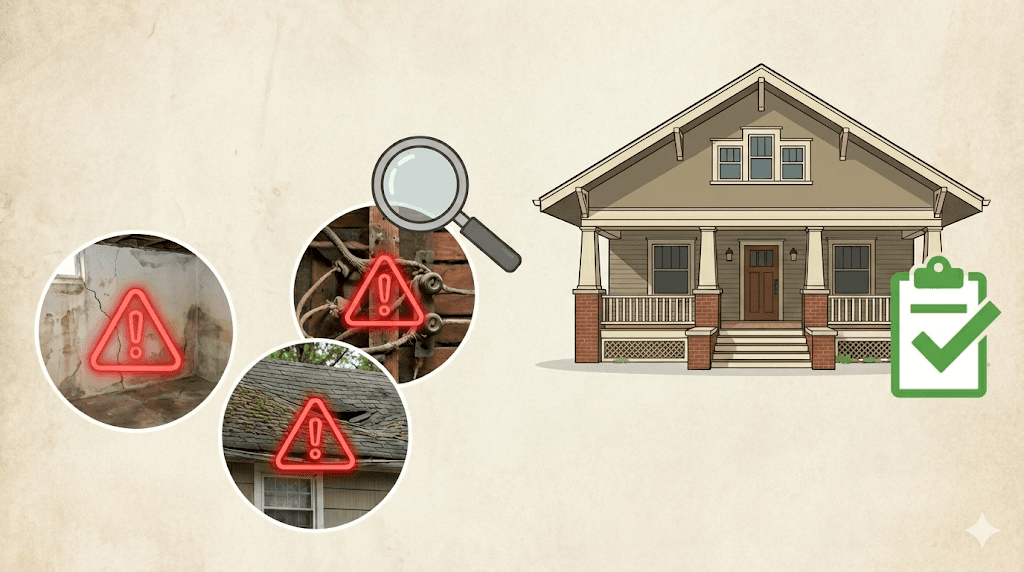
If you’re buying a home in Indianapolis, especially inside the loop or in neighborhoods like Irvington, Broad Ripple, or Fountain Square, inspection red flags are normal, not a sign you messed up.
Indy has a lot of charm — and that charm often comes with older systems, outdated materials, and “creative” DIY updates from past owners.
The key isn’t avoiding inspection issues.
It’s knowing which ones actually matter and how to handle them without killing your deal.
Why Indianapolis Home Inspections Are Different
Indianapolis has one of the older housing stocks in the Midwest.
As of 2025, a large portion of homes in Marion County were built before 1970, with many dating back to the early 1900s. That means inspections here often flag things that wouldn’t show up in newer cities.
Older homes don’t equal bad homes — they just require smarter interpretation.
You want to separate:
Real safety concerns
Negotiation opportunities
Stuff that sounds scary but really isn’t
Common Home Inspection Red Flags in Indianapolis Homes
Foundation Cracks & Basement Moisture
If the home has a basement, this will almost always show up.
Older Indy homes commonly have block or stone foundations, not poured concrete, so minor cracking is expected.
Inspectors often note:
Horizontal or stair-step cracks
Efflorescence (white powder on walls)
Damp basements or active sump pumps
What it usually means:
Most of the time, this is a water management issue, not a structural failure.
How buyers handle it:
Don’t panic on first read
Ask whether a structural engineer is actually recommended
Negotiate drainage improvements or credits, not full rebuilds
Outdated Electrical Systems (Knob & Tube, Fuse Panels)
This is extremely common in pre-1950 Indy homes.
What gets flagged:
Knob-and-tube wiring
Fuse boxes instead of breakers
Ungrounded outlets
What actually matters:
Active knob-and-tube is a bigger deal than abandoned wiring
Some lenders and insurers require updates
Smart buyer move:
Ask for seller credits instead of repairs
Budget roughly $3k–$8k depending on scope
Loop your lender in early so nothing surprises you later
Aging Roofs (Especially Flat or Low-Slope)
Mid-century homes around Indy often have flat or low-slope roofs.
Inspectors usually flag:
Roof near end of life
Soft spots
Improper flashing
What buyers should know:
Roof age alone isn’t the issue — active leaks are.
How this gets negotiated:
Ask about remaining useful life
Request credits instead of replacement when possible
Prioritize leak risk over aesthetics
Old Plumbing (Galvanized or Cast Iron Pipes)
If the home is older and inside the loop, assume plumbing will come up.
Common red flags:
Low water pressure
Corrosion on visible pipes
Slow drains
Reality check:
Galvanized pipes restrict flow over time.
Cast iron eventually fails — but not always immediately.
Best buyer strategy:
Pay for a sewer scope (seriously worth it)
Negotiate credits for partial replacement
Plan upgrades proactively, not reactively
HVAC Systems Near End of Life
Indianapolis weather is hard on mechanical systems.
Inspectors flag:
Furnaces or AC units 15–25 years old
Poor maintenance
Inefficiency
Important context:
Age doesn’t mean failure.
Sellers aren’t required to replace working systems.
How buyers handle this:
Ask for service records
Use age as leverage, not a deal-breaker
Request credits instead of new installs
Older Home Issues That Sound Scary (But Usually Aren’t)
Asbestos & Lead Paint
Very common in older Indy homes.
Often safe if undisturbed
Removal usually only required during renovations
Rarely worth walking over
Uneven Floors
Older homes settle over time — it’s normal.
Focus on sudden or dramatic slopes
Cosmetic unevenness is common and expected
Inspection Checklist: What Indy Buyers Should Actually Prioritize
Not every inspection item deserves a repair request.
We coach buyers to read reports in this order:
Safety concerns
Water intrusion
Major mechanical systems
Cosmetic or maintenance items
This approach keeps negotiations clean and effective.
How to Negotiate Repairs Without Killing the Deal
This is where deals are won or lost.
In competitive Indianapolis markets, buyers who ask for everything often lose leverage — or the deal entirely.
Best practices for repair negotiations:
Focus on 3–5 major items max
Ask for credits instead of seller repairs
Avoid cosmetic requests
This strategy ties directly into what we cover in
How to Win in a Competitive Indianapolis Offer in 2026
https://rootsrealty.co/blog/how-to-win-competitive-indianapolis-market-2026
Buyer Protections You Have in Indiana (That Actually Matter)
Indiana is a buyer-beware state, but you’re not unprotected.
You typically have:
An inspection contingency
The ability to renegotiate or walk
Seller disclosure requirements (with limits)
Credits and concessions matter more than repairs.
We break that down further here:
Seller Concessions in Indianapolis
https://rootsrealty.co/blog/seller-concessions-indianapolis-2025
When Walking Away Is the Right Call
Not every house is worth saving.
We talk about this a lot on the Roots podcast — especially how ignoring red flags can cost you years of progress.
If you want real examples, check out:
The Hardest Lessons in Real Estate Investing That Save You
https://rootsrealty.co/podcast/the-hardest-lessons-in-real-estate-investing-that-save
Sometimes walking isn’t losing — it’s winning.
Indianapolis Home Inspection FAQs
What’s the most common inspection issue in Indianapolis?
Foundation moisture and aging systems are the most common, especially in older homes.
Should I skip an inspection to win in Indy?
Almost never. There are smarter ways to stay competitive without blind risk.
How much should I budget for post-inspection repairs?
For older Indy homes, $5k–$15k is a realistic planning range.
Can I renegotiate after inspection in Indiana?
Yes, as long as your contract includes an inspection contingency.
Final Thoughts: Inspections Are Tools, Not Deal Killers
Buying an Indianapolis home isn’t about finding something perfect.
It’s about understanding what you’re buying and using the inspection to protect yourself and negotiate intelligently — not freak yourself out.
The buyers who win in Indy are calm, informed, and strategic.
If you want help reading an inspection report or negotiating repairs the right way, that’s literally what we do every day.
Ready to buy smarter in Indy?
Connect with Roots Realty Co. and let’s make your next move a confident one.
https://rootsrealty.co/buy

You finally get your offer accepted.
You’re already picturing furniture layouts and backyard hangs.
Then the home inspection report hits your inbox… and it’s 30+ pages long.
If you’re buying a home in Indianapolis, especially inside the loop or in neighborhoods like Irvington, Broad Ripple, or Fountain Square, inspection red flags are normal, not a sign you messed up.
Indy has a lot of charm — and that charm often comes with older systems, outdated materials, and “creative” DIY updates from past owners.
The key isn’t avoiding inspection issues.
It’s knowing which ones actually matter and how to handle them without killing your deal.
Why Indianapolis Home Inspections Are Different
Indianapolis has one of the older housing stocks in the Midwest.
As of 2025, a large portion of homes in Marion County were built before 1970, with many dating back to the early 1900s. That means inspections here often flag things that wouldn’t show up in newer cities.
Older homes don’t equal bad homes — they just require smarter interpretation.
You want to separate:
Real safety concerns
Negotiation opportunities
Stuff that sounds scary but really isn’t
Common Home Inspection Red Flags in Indianapolis Homes
Foundation Cracks & Basement Moisture
If the home has a basement, this will almost always show up.
Older Indy homes commonly have block or stone foundations, not poured concrete, so minor cracking is expected.
Inspectors often note:
Horizontal or stair-step cracks
Efflorescence (white powder on walls)
Damp basements or active sump pumps
What it usually means:
Most of the time, this is a water management issue, not a structural failure.
How buyers handle it:
Don’t panic on first read
Ask whether a structural engineer is actually recommended
Negotiate drainage improvements or credits, not full rebuilds
Outdated Electrical Systems (Knob & Tube, Fuse Panels)
This is extremely common in pre-1950 Indy homes.
What gets flagged:
Knob-and-tube wiring
Fuse boxes instead of breakers
Ungrounded outlets
What actually matters:
Active knob-and-tube is a bigger deal than abandoned wiring
Some lenders and insurers require updates
Smart buyer move:
Ask for seller credits instead of repairs
Budget roughly $3k–$8k depending on scope
Loop your lender in early so nothing surprises you later
Aging Roofs (Especially Flat or Low-Slope)
Mid-century homes around Indy often have flat or low-slope roofs.
Inspectors usually flag:
Roof near end of life
Soft spots
Improper flashing
What buyers should know:
Roof age alone isn’t the issue — active leaks are.
How this gets negotiated:
Ask about remaining useful life
Request credits instead of replacement when possible
Prioritize leak risk over aesthetics
Old Plumbing (Galvanized or Cast Iron Pipes)
If the home is older and inside the loop, assume plumbing will come up.
Common red flags:
Low water pressure
Corrosion on visible pipes
Slow drains
Reality check:
Galvanized pipes restrict flow over time.
Cast iron eventually fails — but not always immediately.
Best buyer strategy:
Pay for a sewer scope (seriously worth it)
Negotiate credits for partial replacement
Plan upgrades proactively, not reactively
HVAC Systems Near End of Life
Indianapolis weather is hard on mechanical systems.
Inspectors flag:
Furnaces or AC units 15–25 years old
Poor maintenance
Inefficiency
Important context:
Age doesn’t mean failure.
Sellers aren’t required to replace working systems.
How buyers handle this:
Ask for service records
Use age as leverage, not a deal-breaker
Request credits instead of new installs
Older Home Issues That Sound Scary (But Usually Aren’t)
Asbestos & Lead Paint
Very common in older Indy homes.
Often safe if undisturbed
Removal usually only required during renovations
Rarely worth walking over
Uneven Floors
Older homes settle over time — it’s normal.
Focus on sudden or dramatic slopes
Cosmetic unevenness is common and expected
Inspection Checklist: What Indy Buyers Should Actually Prioritize
Not every inspection item deserves a repair request.
We coach buyers to read reports in this order:
Safety concerns
Water intrusion
Major mechanical systems
Cosmetic or maintenance items
This approach keeps negotiations clean and effective.
How to Negotiate Repairs Without Killing the Deal
This is where deals are won or lost.
In competitive Indianapolis markets, buyers who ask for everything often lose leverage — or the deal entirely.
Best practices for repair negotiations:
Focus on 3–5 major items max
Ask for credits instead of seller repairs
Avoid cosmetic requests
This strategy ties directly into what we cover in
How to Win in a Competitive Indianapolis Offer in 2026
https://rootsrealty.co/blog/how-to-win-competitive-indianapolis-market-2026
Buyer Protections You Have in Indiana (That Actually Matter)
Indiana is a buyer-beware state, but you’re not unprotected.
You typically have:
An inspection contingency
The ability to renegotiate or walk
Seller disclosure requirements (with limits)
Credits and concessions matter more than repairs.
We break that down further here:
Seller Concessions in Indianapolis
https://rootsrealty.co/blog/seller-concessions-indianapolis-2025
When Walking Away Is the Right Call
Not every house is worth saving.
We talk about this a lot on the Roots podcast — especially how ignoring red flags can cost you years of progress.
If you want real examples, check out:
The Hardest Lessons in Real Estate Investing That Save You
https://rootsrealty.co/podcast/the-hardest-lessons-in-real-estate-investing-that-save
Sometimes walking isn’t losing — it’s winning.
Indianapolis Home Inspection FAQs
What’s the most common inspection issue in Indianapolis?
Foundation moisture and aging systems are the most common, especially in older homes.
Should I skip an inspection to win in Indy?
Almost never. There are smarter ways to stay competitive without blind risk.
How much should I budget for post-inspection repairs?
For older Indy homes, $5k–$15k is a realistic planning range.
Can I renegotiate after inspection in Indiana?
Yes, as long as your contract includes an inspection contingency.
Final Thoughts: Inspections Are Tools, Not Deal Killers
Buying an Indianapolis home isn’t about finding something perfect.
It’s about understanding what you’re buying and using the inspection to protect yourself and negotiate intelligently — not freak yourself out.
The buyers who win in Indy are calm, informed, and strategic.
If you want help reading an inspection report or negotiating repairs the right way, that’s literally what we do every day.
Ready to buy smarter in Indy?
Connect with Roots Realty Co. and let’s make your next move a confident one.
https://rootsrealty.co/buy
You finally get your offer accepted.
You’re already picturing furniture layouts and backyard hangs.
Then the home inspection report hits your inbox… and it’s 30+ pages long.
If you’re buying a home in Indianapolis, especially inside the loop or in neighborhoods like Irvington, Broad Ripple, or Fountain Square, inspection red flags are normal, not a sign you messed up.
Indy has a lot of charm — and that charm often comes with older systems, outdated materials, and “creative” DIY updates from past owners.
The key isn’t avoiding inspection issues.
It’s knowing which ones actually matter and how to handle them without killing your deal.
Why Indianapolis Home Inspections Are Different
Indianapolis has one of the older housing stocks in the Midwest.
As of 2025, a large portion of homes in Marion County were built before 1970, with many dating back to the early 1900s. That means inspections here often flag things that wouldn’t show up in newer cities.
Older homes don’t equal bad homes — they just require smarter interpretation.
You want to separate:
Real safety concerns
Negotiation opportunities
Stuff that sounds scary but really isn’t
Common Home Inspection Red Flags in Indianapolis Homes
Foundation Cracks & Basement Moisture
If the home has a basement, this will almost always show up.
Older Indy homes commonly have block or stone foundations, not poured concrete, so minor cracking is expected.
Inspectors often note:
Horizontal or stair-step cracks
Efflorescence (white powder on walls)
Damp basements or active sump pumps
What it usually means:
Most of the time, this is a water management issue, not a structural failure.
How buyers handle it:
Don’t panic on first read
Ask whether a structural engineer is actually recommended
Negotiate drainage improvements or credits, not full rebuilds
Outdated Electrical Systems (Knob & Tube, Fuse Panels)
This is extremely common in pre-1950 Indy homes.
What gets flagged:
Knob-and-tube wiring
Fuse boxes instead of breakers
Ungrounded outlets
What actually matters:
Active knob-and-tube is a bigger deal than abandoned wiring
Some lenders and insurers require updates
Smart buyer move:
Ask for seller credits instead of repairs
Budget roughly $3k–$8k depending on scope
Loop your lender in early so nothing surprises you later
Aging Roofs (Especially Flat or Low-Slope)
Mid-century homes around Indy often have flat or low-slope roofs.
Inspectors usually flag:
Roof near end of life
Soft spots
Improper flashing
What buyers should know:
Roof age alone isn’t the issue — active leaks are.
How this gets negotiated:
Ask about remaining useful life
Request credits instead of replacement when possible
Prioritize leak risk over aesthetics
Old Plumbing (Galvanized or Cast Iron Pipes)
If the home is older and inside the loop, assume plumbing will come up.
Common red flags:
Low water pressure
Corrosion on visible pipes
Slow drains
Reality check:
Galvanized pipes restrict flow over time.
Cast iron eventually fails — but not always immediately.
Best buyer strategy:
Pay for a sewer scope (seriously worth it)
Negotiate credits for partial replacement
Plan upgrades proactively, not reactively
HVAC Systems Near End of Life
Indianapolis weather is hard on mechanical systems.
Inspectors flag:
Furnaces or AC units 15–25 years old
Poor maintenance
Inefficiency
Important context:
Age doesn’t mean failure.
Sellers aren’t required to replace working systems.
How buyers handle this:
Ask for service records
Use age as leverage, not a deal-breaker
Request credits instead of new installs
Older Home Issues That Sound Scary (But Usually Aren’t)
Asbestos & Lead Paint
Very common in older Indy homes.
Often safe if undisturbed
Removal usually only required during renovations
Rarely worth walking over
Uneven Floors
Older homes settle over time — it’s normal.
Focus on sudden or dramatic slopes
Cosmetic unevenness is common and expected
Inspection Checklist: What Indy Buyers Should Actually Prioritize
Not every inspection item deserves a repair request.
We coach buyers to read reports in this order:
Safety concerns
Water intrusion
Major mechanical systems
Cosmetic or maintenance items
This approach keeps negotiations clean and effective.
How to Negotiate Repairs Without Killing the Deal
This is where deals are won or lost.
In competitive Indianapolis markets, buyers who ask for everything often lose leverage — or the deal entirely.
Best practices for repair negotiations:
Focus on 3–5 major items max
Ask for credits instead of seller repairs
Avoid cosmetic requests
This strategy ties directly into what we cover in
How to Win in a Competitive Indianapolis Offer in 2026
https://rootsrealty.co/blog/how-to-win-competitive-indianapolis-market-2026
Buyer Protections You Have in Indiana (That Actually Matter)
Indiana is a buyer-beware state, but you’re not unprotected.
You typically have:
An inspection contingency
The ability to renegotiate or walk
Seller disclosure requirements (with limits)
Credits and concessions matter more than repairs.
We break that down further here:
Seller Concessions in Indianapolis
https://rootsrealty.co/blog/seller-concessions-indianapolis-2025
When Walking Away Is the Right Call
Not every house is worth saving.
We talk about this a lot on the Roots podcast — especially how ignoring red flags can cost you years of progress.
If you want real examples, check out:
The Hardest Lessons in Real Estate Investing That Save You
https://rootsrealty.co/podcast/the-hardest-lessons-in-real-estate-investing-that-save
Sometimes walking isn’t losing — it’s winning.
Indianapolis Home Inspection FAQs
What’s the most common inspection issue in Indianapolis?
Foundation moisture and aging systems are the most common, especially in older homes.
Should I skip an inspection to win in Indy?
Almost never. There are smarter ways to stay competitive without blind risk.
How much should I budget for post-inspection repairs?
For older Indy homes, $5k–$15k is a realistic planning range.
Can I renegotiate after inspection in Indiana?
Yes, as long as your contract includes an inspection contingency.
Final Thoughts: Inspections Are Tools, Not Deal Killers
Buying an Indianapolis home isn’t about finding something perfect.
It’s about understanding what you’re buying and using the inspection to protect yourself and negotiate intelligently — not freak yourself out.
The buyers who win in Indy are calm, informed, and strategic.
If you want help reading an inspection report or negotiating repairs the right way, that’s literally what we do every day.
Ready to buy smarter in Indy?
Connect with Roots Realty Co. and let’s make your next move a confident one.
https://rootsrealty.co/buy
You finally get your offer accepted.
You’re already picturing furniture layouts and backyard hangs.
Then the home inspection report hits your inbox… and it’s 30+ pages long.
If you’re buying a home in Indianapolis, especially inside the loop or in neighborhoods like Irvington, Broad Ripple, or Fountain Square, inspection red flags are normal, not a sign you messed up.
Indy has a lot of charm — and that charm often comes with older systems, outdated materials, and “creative” DIY updates from past owners.
The key isn’t avoiding inspection issues.
It’s knowing which ones actually matter and how to handle them without killing your deal.
Why Indianapolis Home Inspections Are Different
Indianapolis has one of the older housing stocks in the Midwest.
As of 2025, a large portion of homes in Marion County were built before 1970, with many dating back to the early 1900s. That means inspections here often flag things that wouldn’t show up in newer cities.
Older homes don’t equal bad homes — they just require smarter interpretation.
You want to separate:
Real safety concerns
Negotiation opportunities
Stuff that sounds scary but really isn’t
Common Home Inspection Red Flags in Indianapolis Homes
Foundation Cracks & Basement Moisture
If the home has a basement, this will almost always show up.
Older Indy homes commonly have block or stone foundations, not poured concrete, so minor cracking is expected.
Inspectors often note:
Horizontal or stair-step cracks
Efflorescence (white powder on walls)
Damp basements or active sump pumps
What it usually means:
Most of the time, this is a water management issue, not a structural failure.
How buyers handle it:
Don’t panic on first read
Ask whether a structural engineer is actually recommended
Negotiate drainage improvements or credits, not full rebuilds
Outdated Electrical Systems (Knob & Tube, Fuse Panels)
This is extremely common in pre-1950 Indy homes.
What gets flagged:
Knob-and-tube wiring
Fuse boxes instead of breakers
Ungrounded outlets
What actually matters:
Active knob-and-tube is a bigger deal than abandoned wiring
Some lenders and insurers require updates
Smart buyer move:
Ask for seller credits instead of repairs
Budget roughly $3k–$8k depending on scope
Loop your lender in early so nothing surprises you later
Aging Roofs (Especially Flat or Low-Slope)
Mid-century homes around Indy often have flat or low-slope roofs.
Inspectors usually flag:
Roof near end of life
Soft spots
Improper flashing
What buyers should know:
Roof age alone isn’t the issue — active leaks are.
How this gets negotiated:
Ask about remaining useful life
Request credits instead of replacement when possible
Prioritize leak risk over aesthetics
Old Plumbing (Galvanized or Cast Iron Pipes)
If the home is older and inside the loop, assume plumbing will come up.
Common red flags:
Low water pressure
Corrosion on visible pipes
Slow drains
Reality check:
Galvanized pipes restrict flow over time.
Cast iron eventually fails — but not always immediately.
Best buyer strategy:
Pay for a sewer scope (seriously worth it)
Negotiate credits for partial replacement
Plan upgrades proactively, not reactively
HVAC Systems Near End of Life
Indianapolis weather is hard on mechanical systems.
Inspectors flag:
Furnaces or AC units 15–25 years old
Poor maintenance
Inefficiency
Important context:
Age doesn’t mean failure.
Sellers aren’t required to replace working systems.
How buyers handle this:
Ask for service records
Use age as leverage, not a deal-breaker
Request credits instead of new installs
Older Home Issues That Sound Scary (But Usually Aren’t)
Asbestos & Lead Paint
Very common in older Indy homes.
Often safe if undisturbed
Removal usually only required during renovations
Rarely worth walking over
Uneven Floors
Older homes settle over time — it’s normal.
Focus on sudden or dramatic slopes
Cosmetic unevenness is common and expected
Inspection Checklist: What Indy Buyers Should Actually Prioritize
Not every inspection item deserves a repair request.
We coach buyers to read reports in this order:
Safety concerns
Water intrusion
Major mechanical systems
Cosmetic or maintenance items
This approach keeps negotiations clean and effective.
How to Negotiate Repairs Without Killing the Deal
This is where deals are won or lost.
In competitive Indianapolis markets, buyers who ask for everything often lose leverage — or the deal entirely.
Best practices for repair negotiations:
Focus on 3–5 major items max
Ask for credits instead of seller repairs
Avoid cosmetic requests
This strategy ties directly into what we cover in
How to Win in a Competitive Indianapolis Offer in 2026
https://rootsrealty.co/blog/how-to-win-competitive-indianapolis-market-2026
Buyer Protections You Have in Indiana (That Actually Matter)
Indiana is a buyer-beware state, but you’re not unprotected.
You typically have:
An inspection contingency
The ability to renegotiate or walk
Seller disclosure requirements (with limits)
Credits and concessions matter more than repairs.
We break that down further here:
Seller Concessions in Indianapolis
https://rootsrealty.co/blog/seller-concessions-indianapolis-2025
When Walking Away Is the Right Call
Not every house is worth saving.
We talk about this a lot on the Roots podcast — especially how ignoring red flags can cost you years of progress.
If you want real examples, check out:
The Hardest Lessons in Real Estate Investing That Save You
https://rootsrealty.co/podcast/the-hardest-lessons-in-real-estate-investing-that-save
Sometimes walking isn’t losing — it’s winning.
Indianapolis Home Inspection FAQs
What’s the most common inspection issue in Indianapolis?
Foundation moisture and aging systems are the most common, especially in older homes.
Should I skip an inspection to win in Indy?
Almost never. There are smarter ways to stay competitive without blind risk.
How much should I budget for post-inspection repairs?
For older Indy homes, $5k–$15k is a realistic planning range.
Can I renegotiate after inspection in Indiana?
Yes, as long as your contract includes an inspection contingency.
Final Thoughts: Inspections Are Tools, Not Deal Killers
Buying an Indianapolis home isn’t about finding something perfect.
It’s about understanding what you’re buying and using the inspection to protect yourself and negotiate intelligently — not freak yourself out.
The buyers who win in Indy are calm, informed, and strategic.
If you want help reading an inspection report or negotiating repairs the right way, that’s literally what we do every day.
Ready to buy smarter in Indy?
Connect with Roots Realty Co. and let’s make your next move a confident one.
https://rootsrealty.co/buy